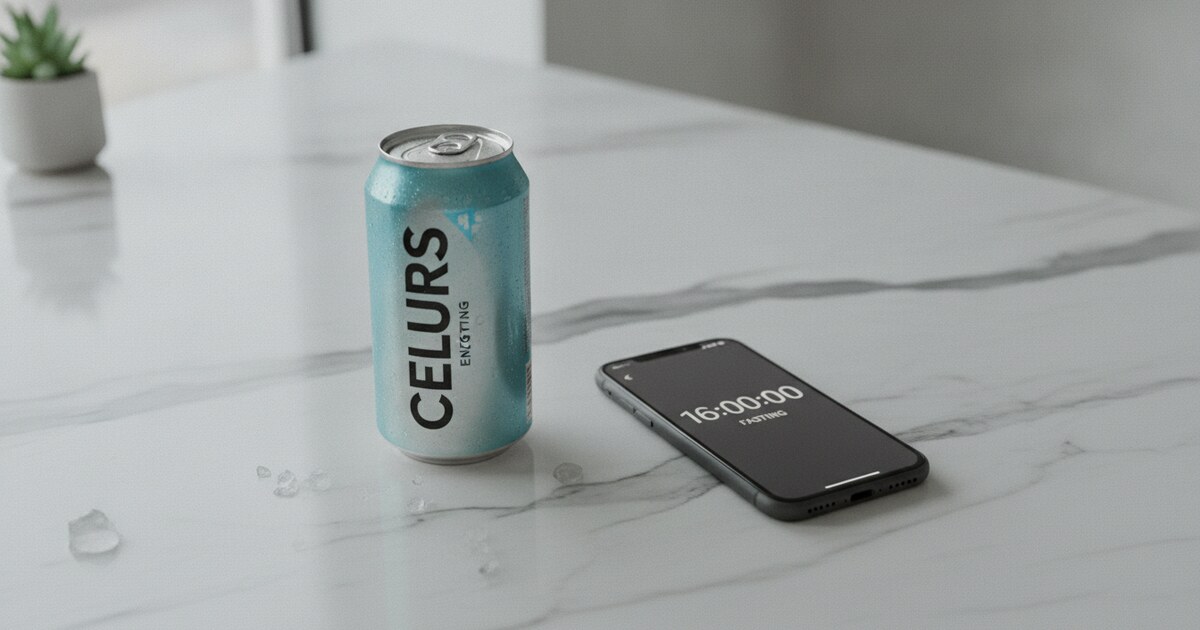
You're halfway through a 16-hour fast and the Celsius in your gym bag is looking more appealing by the minute. The can says 10 calories and zero sugar. That's not nothing, but it doesn't sound like much either. Whether it actually breaks your fast depends on what type of fasting you're doing and what your goals are.
Celsius sits in a genuine gray zone. The calorie count is low enough that most weight-loss protocols would ignore it. The sucralose complicates things for stricter approaches. And the 2 grams of carbohydrates are worth thinking about if you're running a low-carb protocol alongside your fasting window.
This article covers Celsius's full ingredient profile, what the research says about sucralose and insulin, how different Celsius variants compare, and when to swap it for something cleaner. For the framework on exactly where the metabolic threshold sits, our guide on what breaks a fast covers the calorie and carbohydrate lines for each major protocol.
Original Celsius has 10 calories, 2 grams of carbohydrates, and sucralose per 12-ounce can. For standard weight-loss or metabolic fasting, those 10 calories don't cross the threshold that triggers a meaningful insulin response. Sucralose may cause a small insulin signal in some individuals, so strict autophagy fasters should skip it. Plain black coffee delivers similar caffeine with fewer variables.
What's Inside a Celsius
Celsius Original (12 fl oz) contains 10 calories, 2 grams of total carbohydrates, 0 grams of protein, 0 grams of fat, and 200 milligrams of caffeine per can. That caffeine comes from two sources: 150 milligrams of caffeine anhydrous from the proprietary MetaPlus® Blend and additional natural caffeine from guarana seed extract in the same blend. The MetaPlus Blend also includes taurine, green tea leaf extract standardized for EGCG, glucuronolactone, and ginger root powder. There's no sugar in the original formula; sweetness comes from sucralose at approximately 0.10 grams per can. The drink provides B vitamins (niacin, B6, biotin, B12), vitamin C, calcium, and chromium. It contains no artificial preservatives and no high-fructose corn syrup. Celsius Heat raises the caffeine to 300 milligrams but uses the same caloric and sweetener profile. Celsius On-the-Go powder packets and other product lines follow a similar ingredient pattern, though specific formulations vary, so checking the current label is worth 10 seconds before every fasting session.
The ingredient that matters most for fasting is sucralose. The caffeine, taurine, green tea extract, and glucuronolactone are essentially zero-calorie functional ingredients that don't affect insulin directly. The 2 grams of carbohydrates come from botanical and functional ingredients in the blend rather than from added sugar. For most fasting frameworks, the variables to focus on are the calorie count (10), the carbohydrate count (2g), and the sweetener type (sucralose).
Does Celsius Break a Fast for Weight Loss
The standard threshold most intermittent fasting protocols use is somewhere around 50 calories for maintaining the fasted metabolic state. A 2018 review published in Obesity (Anton et al., PMID 29086496), examining the mechanisms that interrupt metabolic fasting, identified insulin release as the primary switch. At 10 calories with no protein, Celsius doesn't generate a meaningful insulin response through its caloric content alone.
The 2 grams of carbohydrates need more thought. Most of those carbs come from botanical ingredients (green tea extract, guarana, ginger root) rather than digestible sugar. There's no added sugar in the formula. The glycemic load from 2 grams of non-sugar carbohydrates in a functional blend is minimal for most healthy adults.
Where this matters more: for people running a ketogenic protocol alongside their fasting window and tracking net carbs closely, 2 grams count against the daily carbohydrate limit even if they're not from sugar. That's worth knowing before Celsius becomes a twice-daily habit during a fasting window.
For a standard 16:8 or 18:6 protocol aimed at weight loss or metabolic health, the 10 calories in Celsius are unlikely to interfere with fat burning or meaningful metabolic outcomes. The picture shifts for stricter protocols, which the next section covers.
Does Sucralose in Celsius Affect Insulin
Sucralose is where most of the fasting debate around Celsius actually lives. It contributes zero calories and doesn't directly raise blood glucose. But sweetness activates taste receptors, and taste receptor activation can produce what researchers call a cephalic phase insulin response (CPIR): an anticipatory insulin release your body primes before anything digestible reaches your bloodstream.
The evidence on sucralose and CPIR is genuinely mixed. A 2017 analysis in Physiology & Behavior (PMID 28899680) examined CPIR across both caloric and non-caloric sweeteners in solid and liquid forms. The study found that low-calorie sweeteners in beverage form produced a blunted CPIR compared to solid food delivery. Celsius is a liquid, which puts it in the lower-response category from that framework.
The more frequently cited concern comes from research showing sucralose increased peak plasma insulin by approximately 20% in obese participants when consumed before an oral glucose tolerance test. The critical detail: that effect was measured when sucralose preceded a glucose load in obese individuals, not when sucralose was consumed alone. For healthy-weight adults fasting without carbohydrate intake, the insulin-stimulating effect of sucralose isn't consistently demonstrated at the doses present in a single can.
A 2024 study on CPIR (PMID 41067674) found that sweet stimuli induce cephalic phase insulin release at varying levels across individuals, with meaningful variation depending on the person's metabolic state and sweetener sensitivity. That variability matters: the same 0.10 grams of sucralose in one Celsius may produce no measurable insulin response in one person and a modest one in someone with higher sweetener sensitivity or insulin resistance.
Practical summary: for weight-loss fasting in healthy adults, the sucralose in Celsius doesn't produce a well-documented insulin disruption at the doses in one can. For people with obesity, insulin resistance, or metabolic conditions, there's a stronger reason to be cautious. Strict autophagy fasters typically exclude all sweeteners from their fasting window regardless of calorie content, since autophagy is sensitive to growth factor signaling pathways that even modest metabolic disturbances can affect.
What About Celsius Heat and Other Variants
Celsius Heat pushes caffeine to 300 milligrams instead of 200, which is the main difference from the original. The caloric and carbohydrate profile is similar: roughly 10 calories, 2 grams of carbs, and sucralose sweetening. The higher caffeine doesn't change the fasting math, since caffeine doesn't break a fast and may support fat oxidation during a fasting window.
Celsius On-the-Go (powder packets) and Celsius Stevia-sweetened versions use different sweetener profiles. Stevia-sweetened variants replace sucralose with stevia, which has a similar evidence base for CPIR. Celsius Essentials and other product lines have their own formulations. Check the label of the specific product you're holding before every fasting session. Celsius updates its lineup periodically, and formulations can change.
Cleaner Alternatives During a Fasting Window
Celsius is built as an energy and pre-workout drink, and it does that job well. During a fasting window, though, there are options with fewer variables.
- Black coffee: 2-5 calories per cup, zero sweeteners, 80-100 milligrams of caffeine per 8 ounces. Two cups matches Celsius's caffeine without sucralose, carbs, or the insulin-response debate.
- Plain green tea: 0-2 calories, the same EGCG antioxidant in Celsius's MetaPlus blend, and 30-50 milligrams of caffeine per cup. Four cups across a morning window covers a moderate caffeine dose with essentially no caloric or sweetener input.
- Sparkling water: If the appeal of Celsius is partly the carbonation (plain water gets monotonous after hour 12), sparkling water with no added flavors or sweeteners handles the fizziness without any fasting-compatibility questions.
If you're drinking Celsius specifically because it works as a pre-workout during fasted training sessions, our guide on does pre-workout break a fast covers how to evaluate pre-workout products in a fasting context and which ingredients are the main concerns.
How FastFocus Helps You Track Your Window
Knowing exactly where you are in a fast changes how decisions like grabbing a Celsius feel. Thirteen hours in with three to go is different from hour 6 with 10 hours ahead of you.
FastFocus tracks your active fasting session with a visual countdown and stores your full fasting history. The app supports certified protocols including 16:8, 18:6, 20:4, 5:2, and OMAD, with streak tracking and detailed session stats so you can see how individual choices affect your consistency over time. The what can you drink while fasting guide covers every common beverage category and how each fits the major fasting protocols.
Download FastFocus on iOS or Android and bring consistent tracking to every fasting window.
Frequently Asked Questions
Does Celsius break intermittent fasting?
Original Celsius (10 calories, 2g carbs, sucralose) won't break a standard weight-loss or metabolic fast in most protocols. The calorie count is too low to produce a significant insulin response. Sucralose may elicit a small cephalic phase insulin response in some individuals, which matters more for autophagy-focused fasting than for 16:8 weight-loss protocols.
Can I drink Celsius during a 16:8 fast?
For most people running a 16:8 protocol focused on fat loss, one Celsius during the fasting window is unlikely to break the fast or meaningfully affect results. The 10 calories and 2 grams of carbs fall well under the metabolic thresholds most protocols set. If you're also tracking net carbs or following a ketogenic approach, those 2 grams count against your daily target even in a fasting window.
Does sucralose break a fast?
The evidence is mixed and dose-dependent. Sucralose doesn't directly raise blood glucose and contributes zero calories. A 2017 study in Physiology & Behavior (PMID 28899680) found that sweeteners in liquid form produce a blunted cephalic phase insulin response compared to solid forms. In healthy-weight adults consuming sucralose without a glucose load, a meaningful insulin disruption isn't consistently demonstrated. Strict fasters avoid all sweeteners as a precaution.
Is Celsius a good pre-workout drink during a fast?
Celsius delivers caffeine and MetaPlus blend effects regardless of whether you're fasting. For a fasted workout, the question is whether the 10 calories and sucralose matter to your specific protocol. Black coffee provides similar caffeine across 2 cups with fewer variables. See the guide on does pre-workout break a fast for a broader comparison of pre-workout products in a fasting context.
Does Celsius affect autophagy?
Celsius contains 10 calories, 2 grams of carbohydrates, and sucralose — all of which could theoretically affect autophagy signaling at the margin. Strict autophagy protocols recommend water, black coffee, and plain tea only, excluding anything with sweeteners or meaningful carbohydrate content. For fasts specifically aimed at autophagy, Celsius is worth skipping. For standard weight-loss fasting, this concern doesn't apply.
Sources
- Flipping the Metabolic Switch: Understanding and Applying the Health Benefits of Fasting — Obesity / PubMed
- The cephalic phase insulin response to nutritive and low-calorie sweeteners in solid and beverage form — Physiology & Behavior / PubMed
- Sweet stimuli induce cephalic phase insulin release to varying degrees in humans — PubMed