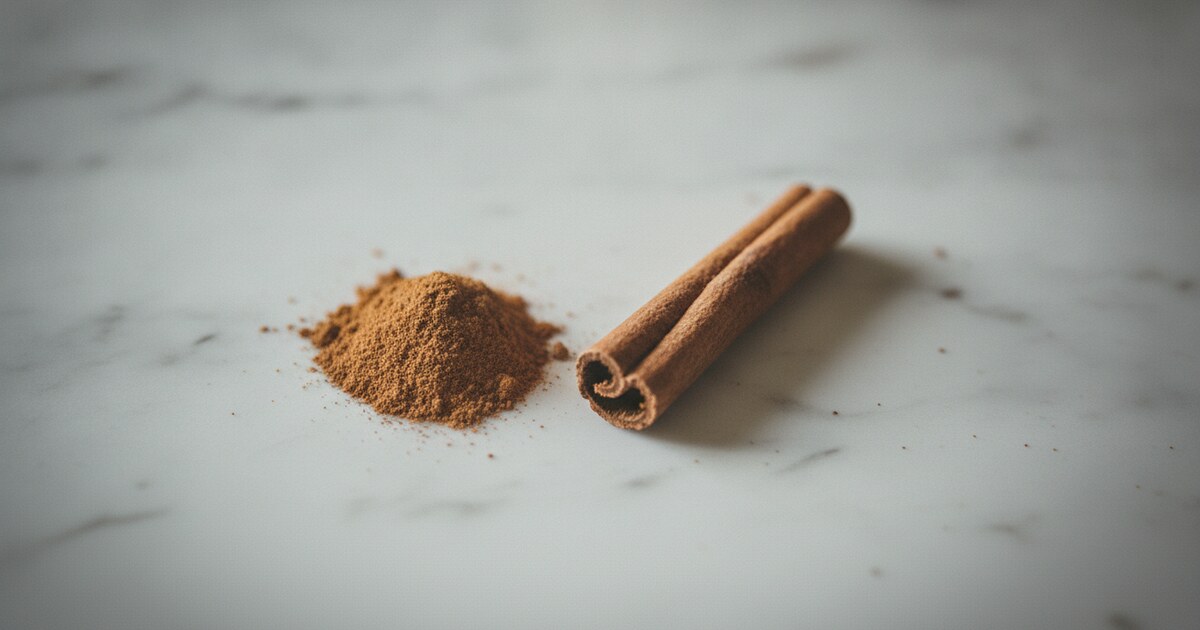
You're 14 hours into your fast, black coffee in hand, and you reach for the cinnamon. A pinch seems harmless. Coffee alone gets monotonous around hour 12, and cinnamon has a reputation for supporting blood sugar. But does it actually break your fast?
The answer genuinely matters. Some additions kill a fast entirely; others sit close enough to zero that the effect is negligible. Cinnamon falls toward the negligible end for most people, but the details depend on how much you use and what your fasting goal is.
For the full framework on what crosses the threshold, our guide on what breaks a fast covers the calorie and insulin thresholds for every major protocol. This article covers cinnamon specifically: the calorie count, what the research says about insulin response, and how it fits into a standard fasting window.
A pinch of cinnamon (roughly 1/4 teaspoon) adds about 1.5 calories and won't break a standard intermittent fast. Research shows cinnamon doesn't raise insulin; it may actually improve insulin sensitivity. For weight loss and metabolic fasting, a sprinkle in black coffee or tea is fine. Strict autophagy fasters should stick to water and black coffee only.
How Many Calories Does Cinnamon Have?
One teaspoon of ground cinnamon (about 2.6 grams) contains roughly 6 calories and 2 grams of carbohydrates. That's not nothing, but it's close.
Most people don't measure out a full teaspoon. A typical pinch or shake over a cup of coffee lands closer to 1/4 teaspoon, which works out to about 1.5 calories and 0.5 grams of carbs. At that amount, cinnamon sits alongside other trace-calorie fasting additions like a squeeze of lemon or a dash of salt.
The practical fasting threshold most protocols use is somewhere around 1-5 calories for maintaining the fasted state. A pinch of cinnamon fits comfortably inside that range. A full teaspoon pushes to 6 calories, which sits at the edge for some protocols, though still far below the 50-calorie threshold often associated with meaningful disruption of fat oxidation.
Does Cinnamon Raise Insulin? What the Research Says
Cinnamon's effect on blood glucose and insulin has been studied in multiple randomized controlled trials. A 2013 meta-analysis of 10 clinical trials involving 543 patients, published in the Annals of Family Medicine (Allen et al., PMID 24019277), found that cinnamon supplementation in doses from 120 mg to 6 grams per day reduced fasting plasma glucose by an average of 24.59 mg/dL across 4-18 weeks. Rather than raising insulin, cinnamon works as an insulin sensitizer at the cellular level. Its primary bioactive compound, cinnamaldehyde, along with a polyphenol polymer called MHCP, activates GLUT4 glucose transporters and enhances the PI3K/Akt insulin signaling pathway, helping cells absorb glucose without requiring additional insulin secretion. A 2021 pilot study in Applied Physiology, Nutrition, and Metabolism (PMID 33553233) found no significant increase in postprandial insulin levels after cinnamon consumption in healthy adults. One teaspoon of cinnamon contains about 6 calories and 2 grams of carbohydrates; a typical pinch (1/4 teaspoon) provides roughly 1.5 calories and 0.5 grams of carbs.
This matters for fasting because the concern with most food additions isn't the calories themselves but whether they trigger an insulin response that disrupts fat burning. With cinnamon, the research points in the opposite direction. A 2007 study in Evidence-Based Complementary and Alternative Medicine (PMID 17140783) identified cinnamaldehyde as a likely mechanism for cinnamon's antidiabetic properties, showing it directly affects glucose metabolism pathways in ways that reduce rather than increase insulin demand.
For most people fasting for weight loss or metabolic health, this makes cinnamon one of the safer fasting additions. It doesn't produce a cephalic phase insulin response the way sweetness does, and its caloric load at culinary amounts is minimal.
Cinnamon in Coffee While Fasting
Cinnamon in black coffee is the most common fasting question involving this spice, and the answer is straightforward: it's fine for standard intermittent fasting.
Black coffee on its own is well within fasting guidelines. Adding a pinch of cinnamon keeps the total at 1-2 calories and doesn't introduce sweetness that would trigger an anticipatory insulin reflex. The 2021 pilot study found no significant insulin elevation following cinnamon intake in non-diabetic adults, consistent with the mechanism described above.
The one thing to watch is what else goes into the coffee alongside cinnamon. Cinnamon plus heavy cream, butter, or MCT oil creates a very different picture. Our article on does black coffee break a fast covers what can and can't be added before the drink stops being fasting-compatible.
For cinnamon tea, the same rules apply. A cinnamon stick steeped in hot water or herbal tea fits within fasting guidelines. The caloric contribution from steeping is essentially zero, since most of the carbohydrates and cinnamaldehyde remain bound in the bark rather than dissolving into the liquid.
Ceylon vs Cassia: Does the Type of Cinnamon Matter?
Most grocery store cinnamon is Cassia (Cinnamomum cassia or Cinnamomum aromaticum), which contains higher levels of coumarin, a naturally occurring compound that can affect liver function in large amounts. Ceylon cinnamon (Cinnamomum verum, sometimes labeled "true cinnamon") contains about 250 times less coumarin than Cassia.
For fasting purposes, the type doesn't meaningfully change the calorie or insulin question. Both have similar caloric density and both have shown insulin-sensitizing properties in research.
Where the type matters is for frequent, higher-dose use. The European Food Safety Authority set a tolerable daily intake for coumarin at 0.1 mg per kilogram of body weight. For a 70 kg (154 lb) person, that's 7 mg per day. Cassia cinnamon contains roughly 1-12 mg of coumarin per gram depending on source, so a single teaspoon could approach the upper limit for daily users. For fasters using a small pinch once or twice a day in coffee, neither type presents a concern at those amounts.
Ceylon is worth choosing if you're adding cinnamon to your fasting routine every day. The coumarin stays negligible at culinary amounts, and the flavor is slightly milder and less peppery than Cassia.
When Cinnamon Could Break Your Fast
At a pinch or light shake, cinnamon won't break a well-established fasting protocol. A few situations shift the answer.
Cinnamon-sweetened beverages: Pre-made cinnamon drink mixes, cinnamon-spiced protein powders, and commercially flavored cinnamon coffees often contain added sugars, syrups, or sweeteners alongside the spice. The cinnamon itself isn't the issue; the additives are. Check the label rather than assuming cinnamon is the only ingredient.
Large amounts in a single drink: A heaping tablespoon of cinnamon adds about 18 calories and nearly 6 grams of carbohydrates. That's an unusual amount for culinary use, but it's worth knowing if you're heavy-handed with the shaker. Keeping it to a sprinkle or 1/4 teaspoon per drink keeps you comfortably under any meaningful threshold.
Strict autophagy fasting: The strictest interpretation of autophagy protocols calls for zero caloric input. A 1.5-calorie pinch probably won't meaningfully suppress autophagy, but the conservative position is water, black coffee, and plain tea only. If you're doing a 24-48 hour extended fast specifically for cellular repair, the easiest choice is to skip it entirely.
For standard 16:8 or 18:6 protocols focused on weight loss and metabolic health, none of these edge cases apply. Our guide on what you can drink while fasting covers the full list of beverages and how they interact with each fasting goal.
Cinnamon and Hunger During a Fast
One practical question beyond the technical: does cinnamon help with hunger, or does it make fasting harder?
The evidence here is indirect but useful. Cinnamon slows gastric emptying, meaning food and liquid move more slowly from the stomach into the small intestine. This effect, documented in studies of cinnamon's impact on postprandial glucose, tends to prolong the sense of fullness. For fasters, a warm mug of cinnamon-spiced black coffee or tea can feel more satisfying than plain water, and the blood sugar stabilization effect may reduce the sharp hunger spikes that hit some people in the early afternoon.
Cinnamon doesn't trigger the cephalic phase insulin response that sweet flavors do. Unlike artificial sweeteners, which activate taste receptors and prime the gut for incoming sugar, cinnamon's flavor profile doesn't produce the same anticipatory reflex. For people sensitive to this effect with sweeteners, cinnamon is generally a more neutral choice.
How FastFocus Helps You Manage Your Fasting Window
Knowing exactly where you are in the fasting window changes how you think about small additions like cinnamon. At hour 8 of a 16-hour fast, you've got the second half ahead of you. At hour 15, a cup of cinnamon-spiced black coffee is an easy way to hold for one more hour until the eating window opens.
FastFocus shows a visual countdown of your active fasting window, so every small decision during the fast can be weighed against your actual progress. The app supports certified protocols including 16:8, 18:6, 20:4, 5:2, and OMAD, with streak tracking and detailed session history to keep your consistency visible over time.
Download on iOS or Android and keep your fasting window on track.
Frequently Asked Questions
Does cinnamon break intermittent fasting?
A pinch of cinnamon (1/4 teaspoon) adds about 1.5 calories and doesn't raise insulin. For standard intermittent fasting protocols like 16:8 or 18:6, a small amount of cinnamon in black coffee or tea won't break your fast in any practical sense. Research shows cinnamon may actually improve insulin sensitivity rather than trigger an insulin response.
Can I put cinnamon in my coffee while fasting?
Yes. Cinnamon in black coffee is one of the more fasting-compatible additions you can make. A pinch or light shake adds 1-2 calories and doesn't introduce sweetness that would trigger a cephalic phase insulin response. Keep the coffee black otherwise; adding cream, milk, or sweeteners alongside the cinnamon is what breaks the fast.
Does cinnamon tea break a fast?
Plain cinnamon tea (a cinnamon stick steeped in water or brewed without additives) is fine for a standard fast. The caloric contribution from steeped cinnamon is minimal, since most of the carbohydrates remain bound in the bark. Cinnamon herbal tea blends that include honey, licorice root, or natural flavors should be checked for added sugars before drinking during a fasting window.
Which type of cinnamon is best for intermittent fasting?
Ceylon cinnamon and Cassia cinnamon both work equally well for fasting purposes. The calorie and insulin effects are similar at culinary amounts. Ceylon is the better choice for daily use because it contains about 250 times less coumarin than Cassia, keeping liver exposure negligible over time. Either type at a pinch or sprinkle presents no concern for occasional use.
How much cinnamon can you have while fasting?
A pinch to 1/2 teaspoon per drink is the practical range for fasting. That's 1-3 calories total, well under any threshold that would meaningfully affect insulin or fat burning. A full teaspoon (6 calories) sits at the edge for stricter protocols. Tablespoon-sized amounts introduce enough calories and carbohydrates to be worth thinking about, particularly if you're adding cinnamon to multiple drinks across a long fasting window.
Sources
- Cinnamon use in type 2 diabetes: an updated systematic review and meta-analysis — Annals of Family Medicine / PubMed
- Acute Effects of Cinnamon Spice on Post-prandial Glucose and Insulin in Normal Weight and Overweight/Obese Subjects: A Pilot Study — Applied Physiology, Nutrition, and Metabolism / PubMed
- Cinnamaldehyde — a potential antidiabetic agent — Pharmaceutical Biology / PubMed