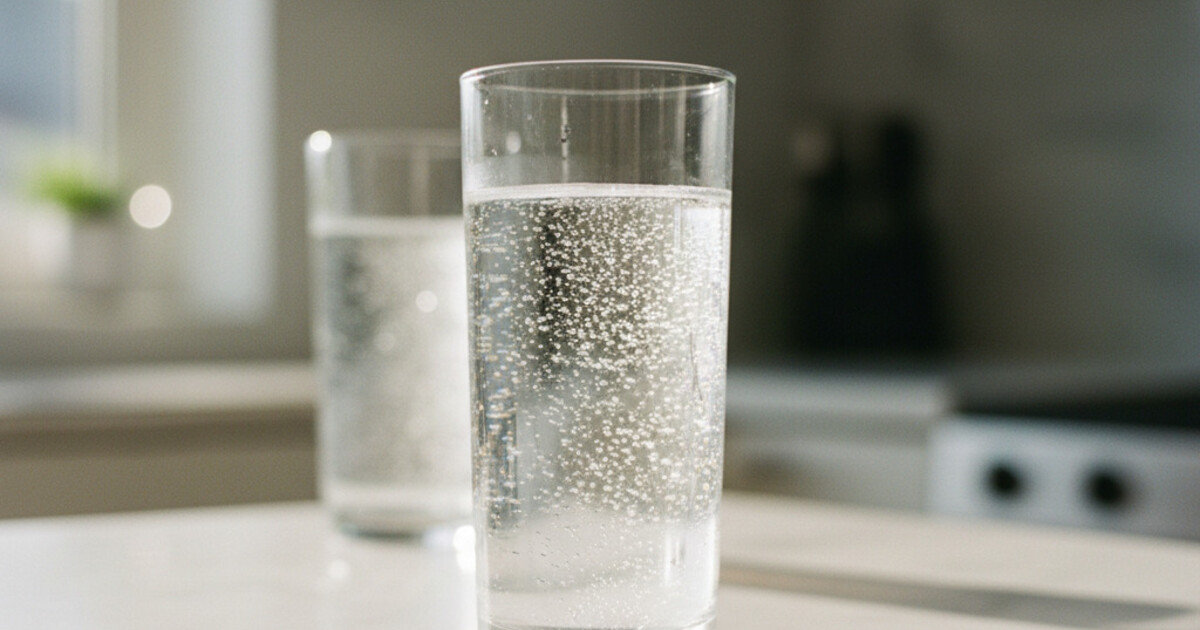
You're two hours into your fast and hunger starts nudging. You reach for a can of sparkling water, then pause. Does carbonated water count? Will the bubbles undo your progress?
This question comes up constantly in fasting communities. The answer depends on what's in your can. Plain carbonated water is almost always safe. Flavored varieties need a label check.
Here's what you need to know before you crack that can.
Plain sparkling water doesn't break a fast. It contains zero calories, zero carbohydrates, and zero protein, so it produces no insulin response and won't interrupt ketosis or autophagy. Flavored sparkling waters are different. If the label shows any calories, added sugar, or sweeteners, they may interfere with your fast depending on your fasting goal.
What Actually Breaks a Fast
To figure out whether sparkling water is safe, you first need to understand what breaks a fast.
A fast breaks when you consume something that raises insulin or provides meaningful calories. Protein, carbohydrates, and fat all trigger insulin responses to varying degrees. Even small amounts can shift your body out of the fasted state.
Different fasting goals have different thresholds:
- Metabolic fasting (weight loss, insulin sensitivity): Anything with calories technically interrupts the fast. The practical threshold most researchers use: stay below 50 calories during the fasting window.
- Ketosis: Carbohydrates matter most. Eating carbs knocks you out of ketosis faster than anything else.
- Autophagy: The most sensitive goal. Some research suggests even small amounts of amino acids may blunt the cellular cleanup process, so strict practitioners stick to water only.
Intermittent fasting works by restricting the window when your body receives calories and nutrients. A fast breaks when you consume something that triggers an insulin response, provides usable energy, or disrupts cellular processes like autophagy. The key factors are calories, carbohydrates, and protein. All three can shift your body out of the fasted state. Plain water, both still and sparkling, contains none of these. It has zero calories, zero macronutrients, and no measurable insulin response. This is why most fasting protocols allow plain water at any time. For weight loss and metabolic fasting, researchers generally use 50 calories as the practical threshold during a fasting window. For ketosis, carbohydrates are the primary concern. For autophagy, even small amounts of amino acids may have an effect, which is why strict practitioners drink only water. Plain sparkling water passes every one of these thresholds.
Staying hydrated during a fast also helps manage hunger and reduce common side effects like fasting headaches. Many people find sparkling water easier to drink in volume than still water, which makes it a practical tool for getting through a long fasting window.
What's in Plain Sparkling Water
Plain sparkling water has two ingredients: water and carbon dioxide. The CO2 creates the bubbles. That's it.
No calories. No carbohydrates. No sweeteners. No additives.
Some varieties also contain trace mineral salts: sodium, magnesium, or potassium. Natural mineral waters like San Pellegrino and Perrier fall into this category. Those minerals can actually help replenish electrolytes during extended fasting, which is a benefit rather than a concern.
Store-brand plain carbonated water, Topo Chico, and Polar seltzer all work the same way. Check the nutrition facts label. If it shows 0 calories, 0g carbohydrates, 0g sugar, and 0g protein, you're clear.
One thing worth knowing: some sparkling waters list sodium on the label. A small amount of sodium (under 35mg per serving) is normal for sparkling mineral waters and poses no issue for fasting. It won't trigger insulin and won't break a calorie-based fast.
Plain vs. Flavored Sparkling Water
This is where it gets more complicated. Flavored sparkling water ranges from safe to fast-breaking, depending on what's been added.
Zero-calorie sparkling water with natural flavors (La Croix, Waterloo, Spindrift's lemon variety): Generally safe. The flavoring agents are present in trace amounts that don't register meaningful calories. These sit in a gray zone but are widely accepted by fasting practitioners.
Sparkling water with artificial sweeteners (aspartame, sucralose, acesulfame-K): Debated. Some research suggests artificial sweeteners can trigger a minor insulin response even without calories. The evidence is mixed. If your goal is strict metabolic fasting or autophagy, skip these.
Sparkling water with fruit juice added: These typically carry 10-30 calories per serving. They break a fast.
Tonic water: Contains sugar (around 32g per 12 oz). Breaks a fast completely.
Coconut water: Often marketed as healthy, but most brands carry 45-60 calories and 11-15g of natural sugar per serving. That breaks a fast.
Flavored sparkling water with added sugar: The nutrition label tells you everything. Any nonzero number under Total Carbohydrates or Added Sugars means the fast is broken.
The same label-reading habit that applies to anything you consume during a fast applies here. Zero calories and zero sugar means you're fine.
Does Carbonation Have Any Effect on Fasting?
Carbon dioxide dissolved in water doesn't get metabolized for energy. It doesn't trigger insulin. It doesn't provide calories or macronutrients. The bubbles are chemically inert from a fasting standpoint.
A 2017 study in the Journal of Nutritional Science and Vitaminology found that carbonated water increased feelings of fullness compared to still water. The researchers measured gastric distension and found sparkling water created significantly more satiety signals than the same volume of still water. That fullness effect can matter during a long fasting window, especially in the 14-16 hour stretch where hunger tends to peak.
One practical downside: carbonation can cause bloating or gas, and this tends to be more noticeable on an empty stomach. Some people find it uncomfortable during longer fasts. If that's you, still water is the obvious fix.
Carbon dioxide also slightly acidifies water when dissolved (carbonic acid forms). This has led some people to wonder whether sparkling water affects stomach acid or digestion during fasting. It doesn't, in any meaningful way. Your stomach produces far more acid than a can of sparkling water could add, and the carbonic acid is expelled quickly as gas. Tooth enamel erosion from sparkling water is a real concern over years of very heavy consumption, but it has no bearing on fasting.
How FastFocus Helps You Track Your Fasting Window
Knowing what you can drink is one part of fasting consistently. Knowing exactly where you are in your fasting window is the other.
FastFocus is a fasting tracker with certified protocols built in: 16:8, 18:6, 20:4, 5:2, OMAD, and others. You start your fast with one tap, and the visual timer shows your real-time progress through the fasting window.
The fasting history and streak tracking let you see your patterns over time. If you're experimenting with sparkling water (or any other beverage change) during your fasting window, having that timeline data makes it easier to spot what's working and what isn't.
The core features are free on iOS and Android. If you're fasting regularly and want a reliable way to track your windows, FastFocus keeps it simple.
Frequently Asked Questions
Does flavored sparkling water break a fast?
It depends on what's in it. Zero-calorie sparkling water with natural flavors is generally safe. Sparkling water with added sugar, fruit juice, or sweetened flavoring breaks a fast. Check the nutrition label: zero calories and zero sugar means you're fine.
Can I drink sparkling water during a 16:8 fast?
Yes, as long as it's plain or zero-calorie. Plain sparkling water has no calories or carbohydrates, so it won't trigger an insulin response or interrupt your 16-hour fasting window. Stick to varieties where the nutrition label shows zeros across the board.
Does carbonation raise insulin levels?
No. Carbon dioxide dissolved in water doesn't trigger an insulin response. The bubbles are metabolically inert. Only calories, carbohydrates, and protein cause insulin to rise. Plain sparkling water doesn't have any of those.
Is La Croix okay during a fast?
Plain and naturally flavored La Croix varieties are generally safe during a fast. The natural flavors are present in trace amounts that don't register as meaningful calories. Avoid any variety that shows calories on the label, or any version with added sweeteners.
What's the best drink during intermittent fasting?
Water (still or sparkling), plain black coffee, and unsweetened herbal teas are all widely accepted as fasting-safe. All three have zero calories and don't interfere with insulin levels, ketosis, or autophagy. For more on coffee specifically, see our guide on whether coffee breaks a fast.
The Bottom Line
Plain sparkling water won't break your fast. The carbonation is inert, there are no calories, and there's no insulin impact. Drink it freely during your fasting window.
Flavored varieties need a label check. Zero calories and zero sugar is your green light. Anything with added sugar, juice, or caloric sweeteners ends the fast.
To track your fasting timer and see your progress in real time, FastFocus is free on iOS and Android. One tap to start, no setup required.