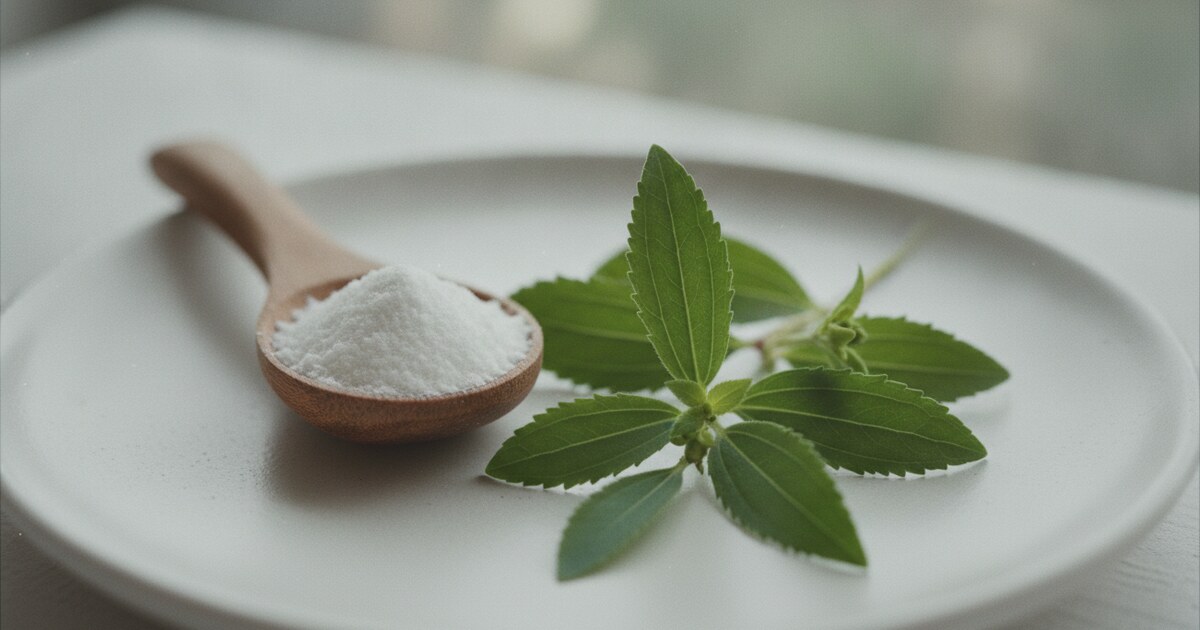
You're 14 hours into a fasting window, tea in front of you, a stevia packet on the counter. Will it push you out of your fast?
The honest answer: it depends on which stevia you're using. Pure stevia extract won't break a fast. The blended products that fill most grocery store shelves often will, because of what manufacturers mix in to bulk them up. The difference matters more than most fasting guides acknowledge.
This article covers how steviol glycosides interact with insulin signaling, which stevia products are actually safe during a fasting window, and what the research shows for stricter fasting goals like autophagy. For a full rundown on other beverages, see our guide on what you can drink while fasting.
Pure stevia doesn't break a fast. Its active compounds, steviol glycosides, have essentially zero calories and produce no meaningful insulin response. A 2016 randomized crossover study found stevia-sweetened beverages produced lower postprandial glucose and insulin than sucrose, with no compensation in daily caloric intake. The catch: most grocery-store stevia packets contain maltodextrin, a high-GI filler that can interrupt a fast.
Why Stevia Doesn't Break a Fast
A fast breaks when you consume enough calories or macronutrients to trigger a meaningful insulin response, the metabolic signal that shifts your body from fat-burning back toward glucose metabolism. Pure stevia clears that threshold comfortably.
Stevia is derived from the leaves of Stevia rebaudiana, a plant native to Paraguay and Brazil that indigenous Guaraní communities used for centuries as a sweetener and medicine. The active compounds, steviol glycosides (primarily stevioside and rebaudioside A), are 200 to 400 times sweeter than sucrose by weight. When consumed, these glycosides pass largely intact through the small intestine without being absorbed. Gut bacteria in the colon hydrolyze them to steviol, which absorbs into the bloodstream, conjugates in the liver, and excretes through urine within 24 hours. The FDA classifies stevia-derived high-intensity sweeteners as GRAS, with an acceptable daily intake of 4 mg per kg of body weight. A 2016 randomized crossover study (PMID 27956737) found stevia-sweetened beverages produced significantly lower postprandial glucose and insulin than sucrose-sweetened drinks, with no compensation in caloric intake. A 12-week randomized trial (PMID 33036155) found no significant effect on glucose homeostasis in healthy adults from daily stevia consumption.
The practical implication: there's no caloric load to trigger digestion, no protein to stimulate mTOR, and no sugar to spike insulin. Pure stevia fits the fasting-safe category for standard intermittent fasting protocols, including 16:8, 18:6, 20:4, OMAD, and 5:2.
How Your Body Processes Stevia
The reason stevia can't break a fast connects directly to how your digestive system handles it.
After you consume stevia, the steviol glycoside molecules travel through your stomach and small intestine largely intact. Your digestive enzymes don't have a clean mechanism for breaking down their glycosidic bonds. They reach the colon, where resident bacteria hydrolyze them into steviol, the base compound.
Steviol absorbs into the bloodstream, gets processed and conjugated in the liver, and clears through urine. The whole process contributes zero usable energy. Your body can't extract glucose, amino acids, or fatty acids from steviol glycosides, so there's nothing in that metabolic chain to trigger insulin secretion or restart the clock.
This is what makes stevia a non-nutritive sweetener in the pharmacological sense, not just a marketing claim. It stimulates sweetness receptors on the tongue, delivers essentially nothing to the body's energy systems, and exits within a day. A review published in PMC (Ajami et al., 2020; PMC6950708) confirmed this absorption pathway and noted that steviol glycosides produce no anabolic signaling during the process, supporting their classification as metabolically inert.
The Problem With Grocery-Store Stevia Packets
Here's where most fasting advice falls short: "stevia" on a product label doesn't mean pure steviol glycosides.
Most name-brand stevia packets sold at grocery stores list maltodextrin as an ingredient, often the first or second one. Maltodextrin is a starch-based filler with a glycemic index between 95 and 136. Table sugar sits at 65. Manufacturers use maltodextrin as a bulking agent because pure stevia extract is so concentrated that a standard-size packet filled with extract alone would be virtually unmanageable to measure and pour.
One blended stevia packet typically contains 0.9 to 1 gram of maltodextrin. That's a modest carbohydrate load on its own, but it supplies glucose that can produce a measurable insulin response. If you're using several packets throughout a fasting window, the cumulative effect compounds.
Some brands use erythritol instead of maltodextrin as the filler. Erythritol is a sugar alcohol with a glycemic index of 0 and no meaningful insulin response. It's a substantially better choice for fasting purposes than maltodextrin. The trade-off is that erythritol causes digestive discomfort in some people at higher doses, including bloating and loose stools, so individual tolerance varies.
Your practical options for a clean fast:
- Liquid stevia drops: typically pure steviol glycoside extract dissolved in water and glycerin. No fillers needed because the liquid format handles concentration without bulking.
- Pure stevia powder: labeled "100% stevia extract" or "steviol glycosides" as the sole ingredient, not a blend.
- Erythritol-blended packets: fasting-safe for most people, though not as clean as pure extract options.
Read the ingredient list, not the front of the package. The word "stevia" appears on every product regardless of what else is inside. For context on other things people commonly add to hot drinks during a fast, our guide on does black coffee break a fast covers cream, MCT oil, and common additives in detail.
Does Stevia Break a Fast for Autophagy?
Autophagy-focused fasting operates under stricter rules than standard intermittent fasting for weight management. Even small amounts of protein or anabolic signaling can reduce autophagic flux, which is why strict water-only protocols exist for people targeting cellular cleanup rather than fat loss.
Pure stevia holds up under this stricter standard better than most "fasting-safe" options. It has zero calories, zero protein, and no insulin-signaling mechanism. The main pathway to autophagy suppression, mTOR activation via insulin or branched-chain amino acids, doesn't get triggered by steviol glycosides at any point in their metabolic journey.
The PMC6950708 review (Ajami et al., 2020) confirmed that steviol glycosides produce no anabolic signaling during absorption and excretion. Unlike coffee, which carries active polyphenols and caffeine that interact with various cellular pathways, stevia is largely metabolically inert throughout the process.
The same caveat applies: maltodextrin-containing blends spike blood glucose and trigger insulin release, which interrupts autophagy signaling. For extended fasts with autophagy as the primary goal, pure liquid drops are the only stevia option that holds up. For a broader look at what crosses the line during a fast, our guide on what breaks a fast covers the full spectrum from calories to specific supplements to zero-calorie compounds.
How FastFocus Supports Your Fasting Window
Knowing which sweetener you're using solves one piece of the puzzle. Knowing exactly how far into your fasting window you are solves another, and that's what a dedicated fasting tracker handles.
FastFocus tracks your sessions with a real-time visual countdown, so you're not guessing whether you're at hour 13 or hour 15. Your complete history builds over time, including streak data and progress charts, so patterns emerge across weeks rather than disappearing after each individual day. Smart notifications let you know when your eating window opens without requiring you to watch a clock.
Whether you're running a 16:8 window with a stevia-sweetened tea during the fasting hours, or pushing through a 20:4 window and want precise timing on when to break the fast, FastFocus handles the mechanics. Download the app on iOS or Android and start your next fasting session with a clear window in front of you.
Frequently Asked Questions
Does stevia break intermittent fasting?
Pure stevia doesn't break intermittent fasting. It has zero calories and produces no meaningful insulin response. The exception is blended stevia products that contain maltodextrin, a starch filler with a glycemic index above 100. Check the ingredient list: pure steviol glycosides are fasting-safe; any product listing maltodextrin is not.
Does stevia spike insulin?
Research consistently shows pure stevia produces no meaningful insulin response in healthy adults. A randomized crossover study (PMID 27956737) found stevia-sweetened beverages resulted in significantly lower postprandial insulin than sucrose-sweetened drinks. Some animal studies show large pharmacological doses of stevioside can stimulate insulin in controlled settings, but those concentrations are far beyond typical dietary use.
Can I put stevia in my coffee or tea while fasting?
Yes, if you're using pure stevia extract. Liquid drops or single-ingredient pure stevia powder work fine in coffee or tea during a fasting window. Avoid brand-name packets that list maltodextrin as an ingredient. For the full picture on coffee, see our guide on does black coffee break a fast.
Does stevia break ketosis?
Pure stevia doesn't break ketosis. It contains no carbohydrates or sugars that would raise blood glucose or trigger insulin release significant enough to shift fat metabolism. Maltodextrin-containing stevia blends supply fast-digesting carbohydrates and can disrupt ketosis with repeated use across a fasting or low-carb eating window.
What's the best stevia to use while fasting?
Liquid stevia drops are the cleanest option. They're typically pure steviol glycoside extract in water and glycerin, with no fillers required. Pure stevia powders labeled '100% stevia extract' also work. Avoid packets from major grocery brands, which commonly list maltodextrin as their first or second ingredient.
Sources
- Effects of aspartame-, monk fruit-, stevia- and sucrose-sweetened beverages on postprandial glucose, insulin and energy intake — International Journal of Obesity / PubMed
- Effects of the Daily Consumption of Stevia on Glucose Homeostasis, Body Weight, and Energy Intake: A Randomised Open-Label 12-Week Trial in Healthy Adults — Nutrients / PubMed
- Safety of Stevia (Stevia rebaudiana Bertoni) as a food additive — PMC / NIH