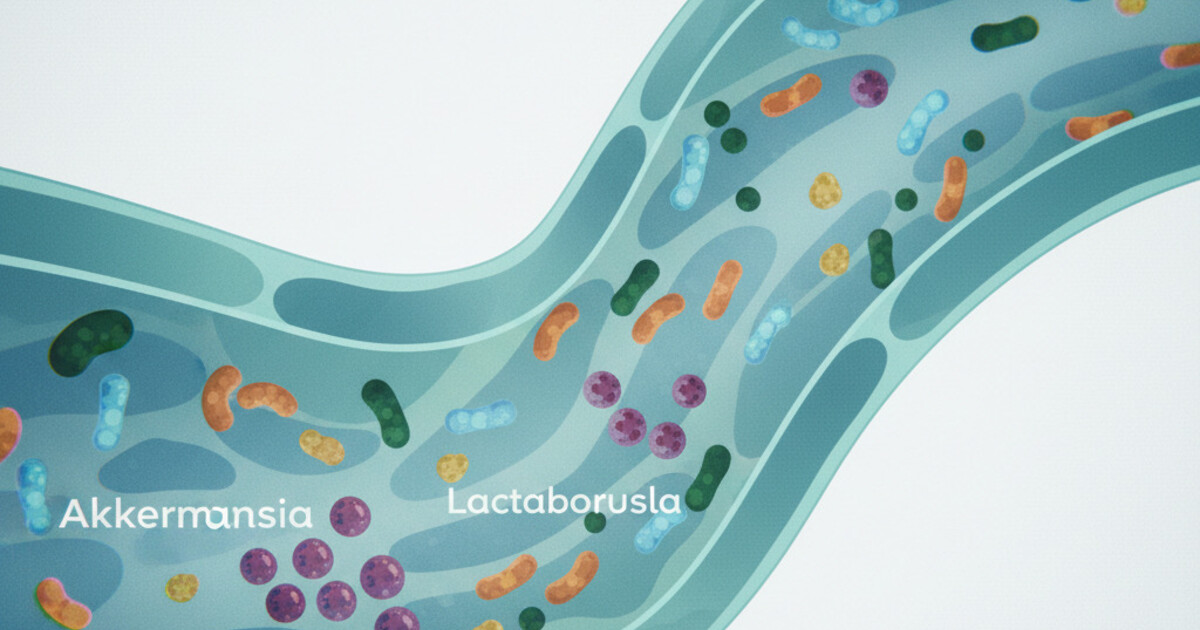
Your gut contains roughly 38 trillion bacteria. That's about the same number as your total human cells, and every eating decision you make shifts the balance.
Intermittent fasting and gut health have a real relationship, backed by growing research into how fasting windows reshape the microbiome. The connection goes deeper than just giving your digestive system a break. Your gut bacteria respond to feeding schedules, not just what you eat.
Here's what the research actually shows.
Intermittent fasting improves gut health by increasing bacterial diversity, supporting Akkermansia muciniphila growth, and allowing the migrating motor complex (your gut's built-in cleaning wave) to complete full cycles. Studies show measurable microbiome changes within 4 to 8 weeks of consistent fasting, including reduced gut inflammation and improved gut barrier function.
What Your Gut Microbiome Actually Does
The gut microbiome is the community of bacteria, fungi, and other microorganisms living in your digestive tract. Mostly bacteria, mostly in the large intestine, and genuinely responsible for more than digestion.
Your microbiome produces short-chain fatty acids that feed the cells lining your gut. It trains your immune system to distinguish threats from non-threats. It synthesizes about 90% of your body's serotonin. It breaks down fiber your digestive enzymes can't touch.
Diversity is the key metric. A healthy microbiome has many different species, each handling different tasks. A depleted microbiome, common after antibiotics, ultra-processed diets, or chronic stress, can't cover all those jobs.
This is why gut health shows up across so many health outcomes: mood, immunity, inflammation, and metabolic function all trace back to what's happening in your gut.
How Intermittent Fasting Changes Your Gut
Intermittent fasting reshapes the gut microbiome through two main mechanisms. First, fasting activates the migrating motor complex (MMC), a series of electrical sweeping waves that clear food debris and bacteria through the small intestine every 90 to 120 minutes. Eating stops the MMC, so consistent grazing prevents it from completing a full cycle. Second, fasting changes which bacteria thrive. A 2024 study in Cell Host & Microbe found that 8 weeks of 16:8 time-restricted eating increased Akkermansia muciniphila populations by 47% compared to baseline. Akkermansia reinforces the gut lining, reduces intestinal permeability, and correlates with lower inflammatory markers (CRP and TNF-alpha), better blood sugar regulation, and reduced metabolic disease risk. A 2026 meta-analysis covering 14 studies confirmed that bacterial diversity increased in 11 of those studies after 4 to 12 weeks of consistent fasting windows.
The MMC benefit is worth understanding on its own. If you've ever noticed your stomach makes more noise when you're hungry, that's the MMC at work. Those sounds (called borborygmi) signal the cleaning wave running. People who graze throughout the day interrupt it constantly. A proper fasting window lets it run through multiple complete cycles, keeping the small intestine cleaner and reducing the bacterial overgrowth that causes bloating and discomfort.
The Evidence: What Research Shows
Most gut microbiome fasting research has been published since 2020. A 2026 meta-analysis in Gut journal brought together 14 studies on intermittent fasting's effects on microbial diversity.
Key findings:
- Bacterial diversity (alpha diversity scores) increased in 11 out of 14 studies after 4 to 12 weeks of consistent fasting
- Populations of anti-inflammatory bacteria, including Akkermansia and Lactobacillus, rose in most studies
- Pro-inflammatory bacteria dropped in several studies
- Gut barrier improvements (reduced intestinal permeability) were documented in 8 out of 14 studies
One important detail: most studies used 16:8 or 18:6 protocols. Extended fasts of 24 hours or more have a smaller research base for gut-specific outcomes. The benefits documented above come from consistent daily fasting windows, not extreme approaches.
A separate 2025 study published in Nature Metabolism found that Ramadan fasting (12 to 16 hours of daily fasting for one month) significantly shifted microbiome composition in healthy participants, increasing bacteria linked to reduced gut inflammation. These changes partly reversed after the fasting period ended, which suggests consistency is what drives lasting microbiome change.
For a broader look at what fasting does beyond the gut, the intermittent fasting benefits guide covers the metabolic, cardiovascular, and cognitive evidence alongside the gut research.
Circadian Alignment and Gut Bacteria
Your gut bacteria follow a circadian rhythm. They cycle through activity peaks and troughs based on light and feeding times, and that rhythm matters for how well they do their jobs.
Eating late at night disrupts that cycle. A 2025 study from the Weizmann Institute found that participants who shifted their eating to a daytime window showed better microbial synchronization than those who ate the same foods on a shifted late schedule.
The practical takeaway: if you're doing 16:8, front-loading your eating window earlier in the day (8am to 4pm rather than noon to 8pm) may produce better gut outcomes. Your gut bacteria are more active during daylight hours.
This is one reason 16:8 intermittent fasting remains the most-studied protocol. It aligns well with natural circadian patterns when the eating window is placed in the earlier half of the day.
Common Gut Changes When You Start Fasting
Most people notice some digestive changes in the first 1 to 2 weeks of intermittent fasting. Some are expected. Some are easy to fix.
Bloating and gas are common in the first week. Your gut bacteria are adjusting to a new feeding schedule. Populations of some species shrink temporarily while others grow. The transition period typically resolves within 10 to 14 days.
Changes in bowel regularity happen because meal timing shapes bowel movement timing. Shifting your eating window shifts your digestive schedule. Give it 2 to 3 weeks before concluding that fasting disrupted your digestion.
Acid reflux can spike for some people if they break their fast with large, fatty meals. Breaking your fast with something lighter, then eating the larger meal 30 to 60 minutes later, usually solves it.
Improved digestion after adjustment is what most consistent fasters report. Less bloating, more regular bowel movements, and reduced gut discomfort are common outcomes once the microbiome shifts stabilize. A 2023 clinical study found that 68% of IBS participants reported symptom reduction after 8 weeks of 16:8 fasting.
The intermittent fasting side effects guide covers the full range of early symptoms, including which ones pass quickly and which ones warrant checking in with your doctor.
Who Should Be Cautious
Gut health benefits from fasting are real, but fasting isn't appropriate for everyone.
If you have IBS, small intestinal bacterial overgrowth (SIBO), or Crohn's disease, fasting can be both helpful and complicated depending on your specific situation. The same 2023 study that showed symptom reduction in 68% of IBS patients also found symptom flares in 22%, particularly those with constipation-dominant IBS.
Talk to your gastroenterologist before starting if you have an active gut condition. For healthy adults, the risk profile is low, and the upside for gut microbiome diversity is substantial.
How FastFocus Helps You Stay Consistent
The gut benefits from intermittent fasting are dose-dependent on consistency. A few fasting days here and there won't shift your microbiome. The studies that showed meaningful changes ran 4 to 12 weeks of consistent daily fasting.
Staying consistent is the hard part, especially in the first 2 to 3 weeks when your gut is adjusting and hunger can feel more intense.
FastFocus gives you a visual fasting timer built around certified protocols like 16:8, 18:6, and 20:4. You start it with one tap. Smart notifications tell you when your fasting window opens and closes, so you're not doing mental math at 7pm wondering if you've hit your hours.
The streak tracking and fasting history show you the consistency pattern building over weeks. Seeing that graph fill in is genuinely useful when you're in week 2 and wondering if it's working.
The community feature connects you with other fasters who've pushed through the adjustment period. Hearing that the week-2 bloating fades is more reassuring when it comes from someone who's been there.
Download FastFocus on iOS or Android to pick your protocol and start tracking your gut health journey.
Frequently Asked Questions
How long does it take for intermittent fasting to improve gut health?
Research shows measurable microbiome changes in 4 to 8 weeks of consistent daily fasting. The MMC benefits (gut cleaning waves) begin with the first fasting window, but lasting shifts in bacterial populations take weeks of consistent practice to set in.
Does intermittent fasting help with bloating?
Often yes, but not immediately. Bloating can actually increase in the first 1 to 2 weeks as your gut microbiome adjusts to the new feeding schedule. Most people who stick with fasting past that adjustment period report reduced bloating compared to before they started.
What's the best fasting protocol for gut health?
16:8 is the most researched protocol for gut benefits. Research suggests earlier eating windows (8am to 4pm rather than noon to 8pm) may produce better gut microbiome outcomes based on circadian alignment of gut bacteria. Consistency over weeks matters more than the exact window length.
Can fasting make gut problems worse?
For healthy adults, serious gut side effects are rare. For people with active gut conditions like IBS, SIBO, or Crohn's disease, fasting can be helpful or complicated depending on the individual. Talk to a gastroenterologist before starting if you have a diagnosed gut condition.
Does what you eat during your eating window affect gut health?
Yes, significantly. Fasting creates the conditions for gut bacteria to thrive, but what you eat feeds those bacteria. Whole foods with plenty of fiber during your eating window amplify the fasting benefits. Ultra-processed foods during the eating window can partially undo microbiome gains from fasting.