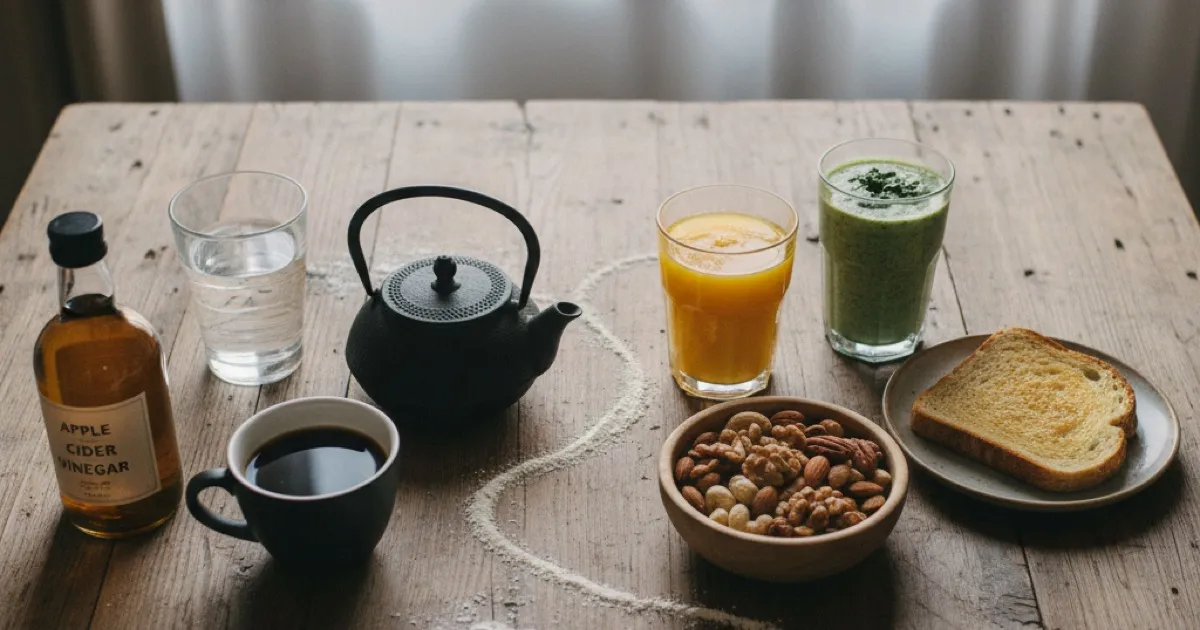
Anything with calories technically breaks a fast. In practice, the threshold most people work to is under about 50 calories — below that, the insulin response is small enough that the fasted state is largely preserved. Water, black coffee and plain tea are safely under it. Anything with sugar, milk, cream or protein is not.
You're 14 hours into your fast and your stomach growls. You reach for a coffee, then pause. Will this ruin everything?
This is the most common question people have when they start intermittent fasting. The answer depends on what you're consuming and why you're fasting in the first place. Some things clearly break a fast. Others fall into a gray area that depends on your goals.
Here's a straightforward breakdown of what breaks a fast and what doesn't, backed by how your body actually processes different substances during a fasted state.
How Fasting Works in Your Body
When you stop eating, your body goes through a series of metabolic shifts. Blood sugar drops, insulin levels fall, and after roughly 12 hours, your body starts burning stored fat for energy. This state is called ketosis.
Around the 16 to 18 hour mark, a process called autophagy kicks in. Your cells start cleaning up damaged proteins and recycling them. This is one of the main reasons people fast beyond basic weight management.
Whether something "breaks" your fast depends on which of these processes you care about most:
- Fat burning: Anything that spikes insulin pulls you out of fat-burning mode
- Autophagy: Even small amounts of protein or certain amino acids can pause cellular cleanup
- Gut rest: Any food that requires digestion activates your gut, even in small amounts
Most people fast for fat loss and metabolic health. If that's you, the practical threshold is roughly 50 calories. Stay under that during your fasting window and you'll keep the core benefits intact.
Drinks That Won't Break Your Fast
These are safe to consume during your fasting window without disrupting fat burning or insulin levels.
Water
Plain water is always fine. Sparkling water and mineral water work too. Add a squeeze of lemon or lime if you want — the trace calories won't matter.
Stay hydrated. Dehydration is the top reason people feel terrible during a fast. Aim for at least 8 glasses spread throughout your fasting window.
Black Coffee
Plain black coffee has about 3 calories per cup and does not break a fast. Studies show caffeine may actually support fasting by boosting fat oxidation and suppressing appetite.
The catch: it must be black. No sugar, milk, cream, or flavored syrups. Even a splash of oat milk adds enough calories and protein to trigger an insulin response.
If you can't drink coffee black, try cold brew. It's naturally smoother and less bitter than hot-brewed coffee.
Plain Tea
Green tea, black tea, herbal tea, and white tea are all fine during a fast. Like coffee, they contain minimal calories and may help with appetite control.
Green tea in particular contains catechins that some research suggests support fat burning during fasted states.
Don't add honey, sugar, or milk. Plain only.
Apple Cider Vinegar
A tablespoon of apple cider vinegar diluted in water contains about 3 calories. It won't break your fast. Some people find it helps with hunger and blood sugar stability, though evidence is mixed.
The Gray Area: Things That Might Break Your Fast
These depend on your fasting goals and how strict you want to be.
Artificial Sweeteners
This one is debated. Diet soda and zero-calorie sweeteners technically have no calories. But some research suggests certain sweeteners (sucralose, aspartame) can trigger an insulin response in some people, even without calories.
If fat loss is your primary goal, most people are fine with occasional use. If you're fasting for autophagy or gut health, skip them.
Bone Broth
A cup of bone broth has around 40 to 50 calories with some protein. It will likely pause autophagy and gut rest. But for fat-burning purposes, the impact is small.
Many people doing longer fasts (24+ hours) use bone broth to ease hunger and maintain electrolytes. If you're doing a standard 16/8 fast, you probably don't need it.
Supplements and Medications
Fat-soluble vitamins (A, D, E, K) work better with food. Take them during your eating window.
Water-soluble vitamins, electrolytes, and most medications won't break a fast. If your doctor prescribed medication with food, follow their guidance — your health comes before your fasting schedule.
Branched-chain amino acids (BCAAs) contain calories and will break a fast.
Cream in Coffee
Even a small splash of cream (15-20 calories) technically breaks a fast. The fat and protein trigger a minor insulin response. If you're strict about fasting, skip it. If you're doing intermittent fasting mainly for weight management and that splash of cream keeps you consistent, the trade-off may be worth it.
Consistency matters more than perfection.
Things That Definitely Break Your Fast
Anything with significant calories, sugar, or protein will pull your body out of a fasted state.
- Any solid food — even a handful of nuts or a piece of fruit
- Sugary drinks — juice, soda, energy drinks, sweetened coffee
- Milk or cream — in amounts beyond a tiny splash
- Protein shakes and smoothies — these are meals, not drinks
- Alcohol — contains calories and your liver prioritizes processing it over fat burning
- Coconut oil or butter in coffee — "bulletproof coffee" is roughly 200-400 calories and breaks a fast, despite what some influencers claim
- Gummy vitamins — they contain sugar and calories
How Many Calories Break a Fast?
Strictly speaking, one. A fast is the absence of caloric intake, so the moment you swallow a calorie you are technically no longer fasting. But that answer is useless in practice, which is why almost everyone works to a threshold instead.
The commonly used figure is 50 calories. Below roughly that amount, the insulin response is small enough that most of the metabolic machinery of fasting — low insulin, fat oxidation, autophagy — carries on more or less undisturbed. It's a rule of thumb rather than a measured cutoff, and you won't find it defined in the research literature. It exists because it's a workable line, not because your body flips a switch at calorie 51.
What matters more than the raw number is what those calories are made of:
| What you consume | Rough calories | Verdict |
|---|---|---|
| Water, black coffee, plain tea | 0–5 | Doesn't break a fast |
| Splash of milk in coffee | 10–20 | Technically breaks it; minimal impact |
| Tablespoon of apple cider vinegar | ~3 | Doesn't meaningfully break a fast |
| Bone broth (1 cup) | 30–50 | Borderline — breaks a strict fast |
| Bulletproof coffee | 200–400 | Breaks a fast |
| Protein shake | 120–300 | Breaks a fast decisively — protein is the strongest insulin trigger per calorie |
Protein and carbohydrate provoke a much larger insulin response than fat does, calorie for calorie. Twenty calories of whey protein disrupts a fast considerably more than twenty calories of coconut oil. So "how many calories" is the wrong question if you take it literally — 30 calories of sugar and 30 calories of olive oil do quite different things to your fasted state.
The honest bottom line: if you're fasting for autophagy or strict metabolic benefit, keep the window genuinely at zero. If you're fasting for weight management and a splash of milk is what keeps you doing it at all, take the splash.
What Doesn't Break a Fast?
Short list, and it's shorter than most people hope:
- Water — still, sparkling, or with a pinch of salt for electrolytes
- Black coffee — nothing added
- Plain tea — green, black, herbal, unsweetened
- Sugar-free gum — see does gum break a fast for the detail
- Toothpaste and mouthwash — provided you don't swallow them
- Most non-caloric medications — though check with your doctor, and some need food
Everything else is either a clear break or lives in the gray area above.
Common Mistakes That Accidentally Break a Fast
People often break their fast without realizing it. Watch out for these:
Flavored water. Many "zero calorie" flavored waters contain sweeteners that can spike insulin. Check the label.
Cough drops and mints. A single cough drop can have 10-15 calories from sugar. Sugar-free mints are generally fine.
Pre-workout supplements. Most contain calories, sugar, or BCAAs. Check the nutrition label before taking them during a fasting window.
"Just a bite." Tasting food while cooking counts. Even a small bite triggers digestion and insulin release.
Chewing gum. Regular gum has sugar. Sugar-free gum is technically fine, but the chewing motion can stimulate hunger in some people.
Does It Actually Matter If You Briefly Break Your Fast?
Here's some perspective. If you're fasting for general health and weight management, a small slip (like a splash of cream in your coffee) won't undo your progress. The bulk of fasting benefits come from the extended period without significant caloric intake, not from being 100% zero-calorie for every minute.
What matters more:
- Consistency over weeks and months beats perfection on any single day
- Staying in your eating window for the majority of your calories
- Not using "gray area" items as a loophole to snack throughout the day
If you're fasting for specific therapeutic reasons (autophagy, gut healing, or managing a medical condition), stricter adherence matters more. Talk to your doctor about your specific situation.
How to Track Your Fasting Window Accurately
Knowing exactly when your fast starts and ends removes the guesswork. A fasting timer shows you how far along you are and helps you decide whether that coffee or supplement fits within your plan.
FastFocus makes this simple. Set your fasting protocol (16:8, 18:6, 20:4, or others), start the timer with one tap, and see exactly where you are in your fasting window. The app tracks your streaks and history so you can spot patterns in what's working.
When you're not sure if something will break your fast, having a clear view of how far into your fast you are helps you make better decisions. Four hours in? Maybe hold off on the bone broth. Fourteen hours in with two to go? Water and black coffee will get you through.
Frequently Asked Questions
Does lemon water break a fast?
No. A squeeze of lemon in water adds about 1-2 calories. It won't affect insulin or fat burning. Lemon water is a popular way to make water more palatable during a fast.
Will black coffee with stevia break my fast?
Stevia is calorie-free and most studies show it doesn't trigger an insulin response. For most people, stevia in black coffee is fine during a fast. If you're fasting for autophagy, pure water and plain black coffee are safer choices.
Can I take my vitamins while fasting?
Water-soluble vitamins (B vitamins, vitamin C) are fine on an empty stomach. Fat-soluble vitamins (A, D, E, K) absorb better with food. Save those for your first meal after fasting.
Does toothpaste break a fast?
No. You don't swallow toothpaste (hopefully), so it has zero caloric impact. Brush your teeth normally.
How many calories will break a fast?
The commonly cited threshold is about 50 calories. Below that, your body stays in a fasted metabolic state for practical purposes. Above 50 calories, you're likely triggering enough insulin to shift out of fat-burning mode.
The Bottom Line
Stick to water, black coffee, and plain tea during your fasting window and you'll be fine. Most other things either break your fast outright or fall into a gray area that depends on your specific goals.
Don't overthink it. The biggest benefit of intermittent fasting comes from consistently maintaining your eating window over time, not from obsessing over whether 3 calories of lemon juice ruined your fast. If you're new to fasting, start with our beginner's guide and build from there.
If you want a simple way to stay on track, FastFocus gives you a visual timer, protocol options, and streak tracking to keep your fasting consistent — available free on iOS and Android.
Sources
- Effects of Intermittent Fasting on Health, Aging, and Disease — The New England Journal of Medicine (2019)
- Metabolic Effects of Intermittent Fasting — Annual Review of Nutrition (2017)
- The effect of fasting or calorie restriction on autophagy induction: A review of the literature — Ageing Research Reviews (2018)
- Intermittent Fasting: 4 Different Types Explained — Cleveland Clinic