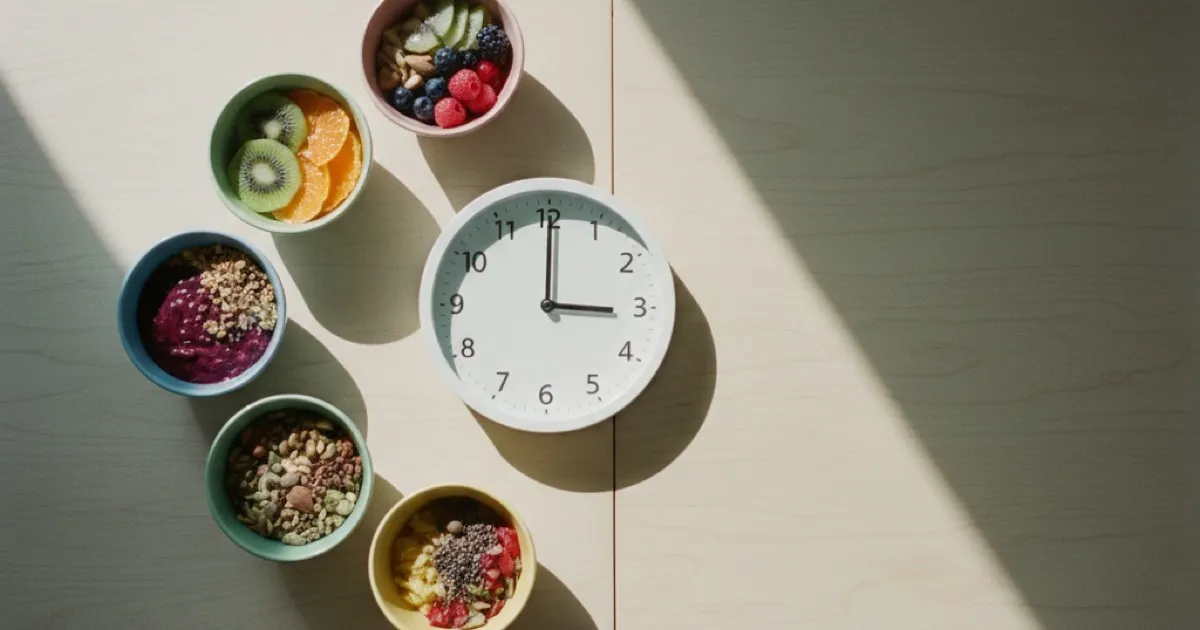
The 16/8 method is the most widely practiced form of intermittent fasting, and for good reason. You fast for 16 hours, eat within an 8-hour window, and repeat daily. No calorie counting, no complicated meal plans, no special foods required. It works because it fits the way most people already live -- you just shift the timing slightly and skip a meal.
If you are new to fasting in general, you may want to start with our intermittent fasting beginner's guide before diving into the specifics of 16/8. But if you already understand the basics and want to know exactly how to structure this protocol, you are in the right place.
What Is 16/8 Intermittent Fasting?
The 16/8 method divides each 24-hour day into two blocks: a 16-hour fasting period and an 8-hour eating period. During the fast, you consume no calories. During the eating window, you eat your normal meals -- typically two or three, depending on your preference.
For most people, the 16-hour fast includes sleep. If you stop eating at 8 PM and do not eat again until noon the next day, that is a 16-hour fast. You slept through roughly half of it. That is what makes 16/8 so approachable. You are not white-knuckling through an entire waking day without food. You are skipping breakfast (or dinner, if you prefer an earlier window) and eating normally the rest of the time.
The protocol was popularized by Martin Berkhan's Leangains method, which paired the 16/8 eating pattern with resistance training. Since then, it has become the default starting point for anyone exploring time-restricted eating.
Why 16/8 Is the Most Popular Fasting Method
There are dozens of fasting protocols -- 5:2, OMAD, alternate-day fasting, extended fasts. But 16/8 consistently dominates because it hits the sweet spot between effectiveness and sustainability.
- Low friction. You remove one meal from your day. That is the entire behavioral change. There is no day-on/day-off schedule to remember, no 500-calorie "fasting day" meals to plan.
- Socially compatible. An 8-hour eating window (say, noon to 8 PM) covers lunch and dinner, which are the meals most people share with others. You rarely have to explain why you are not eating.
- Flexible timing. You can shift the window to match your lifestyle. Early risers can eat from 7 AM to 3 PM. Night owls can eat from 2 PM to 10 PM. The 16-hour fast matters; when you place it is up to you.
- Mild enough to sustain long-term. Most people adapt within one to two weeks. Unlike longer fasts, 16/8 rarely causes the fatigue, irritability, or muscle loss that can accompany more aggressive protocols.
The Science Behind 16/8 Fasting
The benefits of 16/8 fasting go beyond simple calorie reduction. Restricting your eating window triggers a cascade of metabolic changes that do not occur when you eat the same amount of food spread across 14 or 15 waking hours.
Fat Burning and Metabolic Switching
After roughly 12 hours without food, your body depletes its liver glycogen stores and begins relying more heavily on fatty acids and ketone bodies for energy. This is sometimes called the "metabolic switch." With a 16-hour fast, you spend approximately 4 hours in this enhanced fat-burning state every single day. Over weeks and months, that adds up.
Improved Insulin Sensitivity
Every time you eat, your body releases insulin to shuttle glucose into cells. When you eat frequently across a long window, insulin stays chronically elevated. A condensed eating window gives your body extended periods with low insulin, which improves cellular insulin sensitivity over time. Research published in Cell Metabolism has shown that time-restricted eating can reduce insulin resistance even without changes in total calorie intake.
Autophagy and Cellular Repair
Fasting activates autophagy -- your body's internal recycling process, where damaged or dysfunctional cellular components are broken down and repurposed. While autophagy ramps up more significantly during longer fasts, a consistent daily 16-hour fast still provides a meaningful window for this process to occur, especially during the later hours of the fast.
Reduced Inflammation
Multiple studies have demonstrated that time-restricted eating reduces markers of systemic inflammation, including C-reactive protein and pro-inflammatory cytokines. Chronic low-grade inflammation is linked to heart disease, type 2 diabetes, and many other conditions, so this is not a trivial benefit.
Brain Health
Fasting increases production of brain-derived neurotrophic factor (BDNF), a protein that supports the survival and growth of neurons. Higher BDNF levels are associated with improved learning, memory, and resistance to neurological disease. Many people practicing 16/8 report sharper mental clarity during their fasting hours once they have adapted to the schedule.
Sample Daily Schedules
There is no single correct 16/8 schedule. The best one is the one that fits your life. Here are two common approaches.
The Noon-to-8 PM Window (Most Popular)
This is the classic 16/8 setup and works well for the majority of people.
- 7:00 AM -- Wake up. Black coffee or plain tea.
- 8:00 - 11:30 AM -- Fasting continues. Water, sparkling water, or another coffee if you need it.
- 12:00 PM -- Break your fast with a balanced meal. Prioritize protein, healthy fats, and fiber.
- 3:00 - 4:00 PM -- Snack or small meal if needed.
- 7:30 PM -- Dinner. Your final meal of the day.
- 8:00 PM -- Eating window closes. Begin your 16-hour fast.
This schedule essentially means skipping breakfast. Most people find the morning fast easy because cortisol (your natural alertness hormone) peaks in the morning, which naturally suppresses appetite.
The Early Window: 7 AM to 3 PM
If you prefer eating earlier in the day or have research-backed concerns about late-night eating, an early window can be effective.
- 7:00 AM -- Break your fast with breakfast.
- 11:30 AM -- Lunch.
- 2:30 PM -- Final meal or snack.
- 3:00 PM -- Eating window closes.
- 3:00 PM - 7:00 AM -- Fasting period through the evening and overnight.
Some research from the Salk Institute suggests that earlier eating windows may align better with circadian rhythms. The trade-off is that you skip dinner, which can be socially difficult. Choose the approach that you can actually stick to.
What You Can Consume During the Fasting Window
The fasting window is a zero-calorie window. That said, certain beverages are widely considered acceptable because they do not trigger a meaningful insulin response or break the metabolic fasting state.
- Water -- Still or sparkling. Add a pinch of salt if you feel lightheaded, which helps with electrolytes.
- Black coffee -- No sugar, no cream, no milk. Coffee actually enhances some fasting benefits by boosting autophagy and fat oxidation.
- Plain tea -- Green tea, black tea, herbal tea. No sweeteners.
- Apple cider vinegar -- A tablespoon diluted in water is fine and may help with appetite.
Anything with calories -- including "just a splash" of milk, a piece of fruit, or a handful of nuts -- breaks your fast. Artificial sweeteners are debated: while they contain no calories, some evidence suggests they can trigger an insulin response in certain people. If your goal is maximum fasting benefit, keep your fasting window clean.
How to Break Your Fast
After 16 hours, your digestive system has been resting. While you do not need to be as careful as someone breaking a multi-day fast, a little intention here goes a long way.
Start with something that is easy on the stomach and nutrient-dense. A meal built around protein (eggs, chicken, fish, Greek yogurt) with some vegetables and healthy fats is ideal. Avoid breaking your fast with a large amount of refined carbs or sugar, which can cause a blood sugar spike and an energy crash. For more on this, check out our guide on the best foods to break your fast.
Tips for Making the Transition Easier
Most people adapt to 16/8 within 7 to 14 days. The first few days can feel uncomfortable, especially if you are used to eating breakfast first thing. Here is how to make it smoother.
- Ease in gradually. Start with a 12-hour fast and extend by 30 to 60 minutes every few days until you reach 16 hours. There is no prize for jumping straight to 16 hours and suffering through it.
- Stay busy in the morning. Hunger is often driven by habit and boredom, not genuine need. Schedule your most engaging tasks during the last hours of your fast.
- Drink plenty of water. Thirst is frequently mistaken for hunger. Start your morning with a large glass of water and keep drinking throughout the fast.
- Use black coffee strategically. Caffeine is a natural appetite suppressant. A cup of black coffee at 9 or 10 AM can carry you through to noon without thinking about food.
- Eat enough during your window. Under-eating during your 8-hour window will make the fast harder the next day. You are compressing your meals, not reducing them. Make sure you hit adequate calories and protein.
- Pick a consistent schedule. Your body's hunger hormones (particularly ghrelin) adapt to your eating pattern. If you eat at noon every day, within a week or two your body will stop sending hunger signals at 8 AM.
Working Out on a 16/8 Schedule
One of the most common questions about 16/8 is when to exercise. The answer depends on your goals and how your body responds to fasted training.
Training Fasted (Before Your Eating Window)
Working out in a fasted state -- for example, a 10 AM gym session when your window opens at noon -- can increase fat oxidation during exercise. Some people feel lighter and more focused training on an empty stomach. If you go this route, break your fast with a protein-rich meal immediately after your workout to support recovery and muscle protein synthesis.
Training Fed (During Your Eating Window)
If your priority is strength or high-intensity performance, training after a meal may be better. Having glycogen available improves output during heavy lifting and intense interval work. A good approach is to eat your first meal at noon, train at 2 or 3 PM, and have your post-workout meal as dinner.
Training in the Evening
If you train at 6 or 7 PM with a noon-to-8 PM window, you have the advantage of having eaten one or two meals already. Just make sure you have time for a post-workout meal before your window closes. Even a protein shake before 8 PM is better than nothing.
The best training schedule is the one that lets you work out consistently. Do not overthink timing. If fasted training makes you dizzy, eat first. If eating before exercise makes you sluggish, train fasted. Listen to your body.
Tracking Your 16/8 Fasts
Consistency is what makes 16/8 work. A single day of fasting does very little. Weeks and months of consistent daily fasts is where the metabolic adaptations happen -- improved insulin sensitivity, reduced inflammation, easier fat loss.
That is where tracking becomes valuable. FastFocus lets you start and stop your fasting timer, see exactly how many hours you have been fasting, and build streaks over time. It supports the 16/8 protocol (along with 18/6, 20/4, and custom schedules), so you can see at a glance whether you are hitting your targets. Having a visual record of your fasting consistency makes it far easier to stay accountable, especially during the first few weeks when the habit is still forming.
When to Advance Beyond 16/8
Once 16/8 feels easy -- and for most people it does after three to four weeks -- you may consider extending your fast.
- 18/6 -- Two extra hours of fasting with a 6-hour eating window. This is the natural next step and works well for people who find they do not need three meals. Most people eat two solid meals in a 6-hour window.
- 20/4 (Warrior Diet) -- A 4-hour eating window, typically one large meal and one smaller meal. This provides more time in the deeper fasting states but is harder to sustain socially and can make it difficult to consume adequate calories.
- OMAD (One Meal a Day) -- A single meal within a 1-hour window. This is an advanced protocol and not recommended unless you have several months of fasting experience and can reliably eat enough in one sitting.
There is no rush to advance. If 16/8 is giving you the results you want -- better energy, easier weight management, improved focus -- there is no reason to push further. Many people practice 16/8 for years and never feel the need to change.
Who Should Be Cautious With 16/8
While 16/8 is safe for most healthy adults, certain groups should consult a doctor before starting:
- Pregnant or breastfeeding women
- People with a history of eating disorders
- Those taking medications that must be taken with food at specific times
- People with type 1 diabetes or advanced type 2 diabetes on insulin
- Anyone under 18
If you are generally healthy and do not fall into any of these categories, 16/8 is one of the lowest-risk dietary interventions you can try. It does not require special foods, supplements, or any spending at all. You are simply changing when you eat, not what you eat.
Getting Started Today
Here is your action plan. Pick an 8-hour eating window that fits your schedule. Set a reminder on your phone or start a timer in the FastFocus app when your eating window closes. Drink water, coffee, or tea through the fasting hours. Eat balanced, satisfying meals during your window. Track your fasts daily and aim for at least two consistent weeks before evaluating results.
The first three days are the hardest. After a week, it becomes routine. After a month, you will wonder why you ever ate breakfast at 7 AM in the first place.