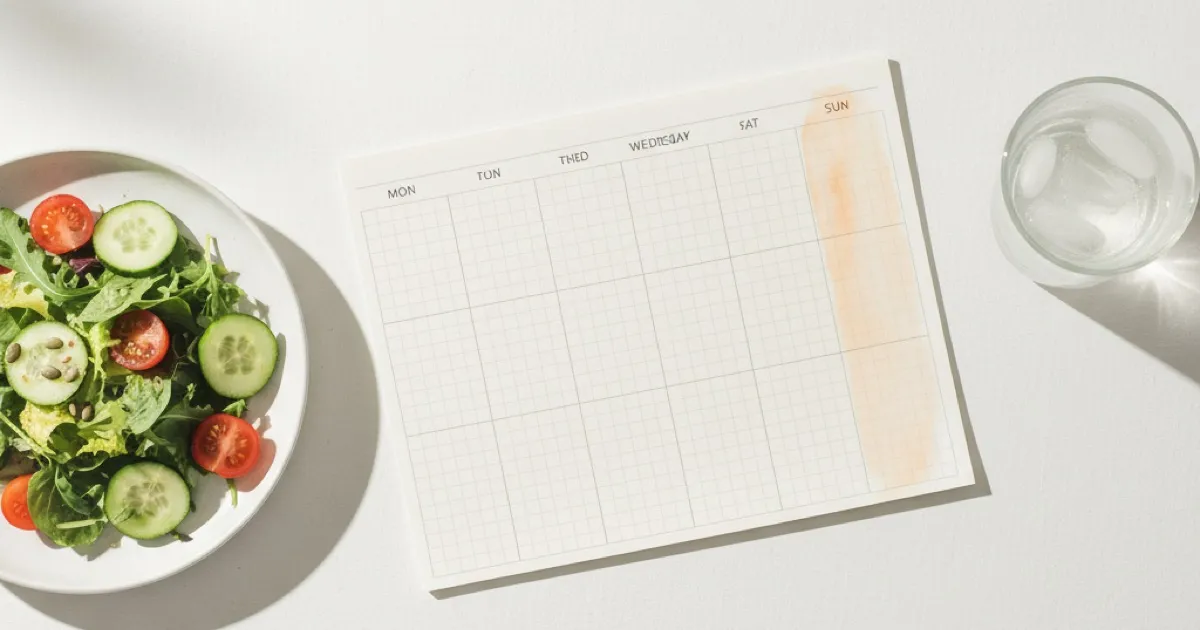
The 5:2 fasting method is one of the most flexible approaches to intermittent fasting. You eat normally five days a week and restrict calories to 500-600 on two non-consecutive days. No daily eating windows, no skipping meals every morning, no restructuring your entire schedule.
This method gained popularity after Dr. Michael Mosley's 2013 book The Fast Diet brought it mainstream. Since then, dozens of clinical studies have tested the 5:2 approach against daily fasting and traditional diets. The results show it works — and for certain people, it works better than daily time-restricted eating.
Here's a complete guide to the 5:2 fasting method: how to structure your fasting days, what to eat on them, what the research says, and how to decide if this protocol fits your life.
How the 5:2 Fasting Method Works
The structure is simple. Pick two days per week as your fasting days. On those days, eat 500 calories if you're female or 600 calories if you're male. On the other five days, eat normally.
The two fasting days should not be consecutive. Most people choose Monday and Thursday, or Tuesday and Friday. Spacing them out makes the protocol easier to sustain and prevents the fatigue that comes from back-to-back calorie restriction.
On fasting days, you can eat your calories in one meal, two small meals, or three very small meals. There's no required timing. Some people prefer a single 500-calorie dinner so they can fast through most of the day. Others split it into a small lunch and a small dinner to avoid sustained hunger.
On your five normal days, you eat without restrictions. You don't count calories, skip meals, or follow any particular rules. The only guideline: eat a reasonable diet. The 5:2 method won't produce results if your "normal" days involve consistent overeating.
What to Eat on Fasting Days
With only 500-600 calories to work with, every food choice matters. Prioritize protein and vegetables — they keep you full longest per calorie.
High-protein options:
- 2 eggs (140 cal) + large mixed salad with vinaigrette (100 cal) = 240 cal
- 150g chicken breast (165 cal) + steamed broccoli and cauliflower (60 cal) = 225 cal
- 200g Greek yogurt (130 cal) + handful of berries (50 cal) = 180 cal
- Tin of tuna (120 cal) + cucumber and tomato salad (40 cal) = 160 cal
Sample 500-calorie day:
- Lunch: 2 boiled eggs + large green salad with lemon dressing (260 cal)
- Dinner: Grilled white fish + roasted vegetables (240 cal)
Sample 600-calorie day:
- Lunch: Greek yogurt with berries and a sprinkle of nuts (210 cal)
- Dinner: Chicken stir-fry with peppers, onions, and soy sauce over cauliflower rice (390 cal)
Avoid calorie-dense foods on fasting days. A single slice of pizza or a handful of trail mix can eat half your daily budget. Stick to whole foods with high volume and low calorie density.
Drink water, black coffee, and plain tea freely. These have zero or negligible calories and won't affect your fast. Coffee especially helps manage hunger on fasting days. For more on what you can drink while fasting, see our guide on what breaks a fast.
5:2 vs. Daily Intermittent Fasting
The most popular alternative to 5:2 is daily time-restricted eating, usually 16:8 fasting (eating within an 8-hour window every day). Both methods produce weight loss and metabolic improvements. The difference is in how they fit your life.
The 5:2 method works better if you:
- Don't want to change your eating schedule every day
- Prefer "two hard days" over daily discipline
- Have social or work obligations that make daily fasting windows difficult
- Want to eat breakfast on most days
- Find it easier to be strict occasionally than moderate constantly
Daily fasting (16:8) works better if you:
- Prefer routine and consistency
- Naturally skip breakfast anyway
- Want daily fat-burning windows
- Find full restriction days too difficult mentally
A 2021 study in PLOS Medicine compared 5:2 and daily calorie restriction over 50 weeks. Both groups lost similar amounts of weight (about 5% of body weight). Adherence rates were also similar, though the 5:2 group reported higher satisfaction with their eating pattern.
The takeaway: the best fasting schedule is the one you'll stick with for months. If you've tried daily fasting schedules and found them too restrictive, 5:2 might be the answer. If you've tried 5:2 and struggled with fasting days, daily time-restricted eating might suit you better.
What the Research Says About 5:2
The 5:2 fasting method has been studied extensively since 2013. Here's what the evidence shows.
Weight loss. A 2018 systematic review of 12 trials found that 5:2 fasting produced average weight loss of 4-8% of body weight over 3-6 months. These results were statistically equivalent to daily calorie restriction of the same overall magnitude. For a 180-pound person, that's 7-14 pounds of sustained loss.
Insulin sensitivity. Multiple studies show 5:2 improves fasting insulin levels and insulin sensitivity. A 2018 study in the British Journal of Nutrition found that women on the 5:2 diet had greater improvements in insulin sensitivity than women on a daily calorie-restricted diet, even though total weight loss was similar.
Inflammation. Research shows reductions in C-reactive protein (CRP) and other inflammatory markers after 8-12 weeks on 5:2. This is consistent with the broader benefits of intermittent fasting.
Heart health. A 2020 trial published in Obesity found that participants on the 5:2 protocol showed improvements in LDL cholesterol, triglycerides, and blood pressure after 6 months. The cardiovascular improvements were comparable to those seen in daily fasting protocols.
Muscle preservation. One concern with any fasting method is muscle loss. Studies on 5:2 suggest that muscle loss is minimal when protein intake stays adequate (0.7-1g per pound of body weight) and participants include resistance training. The non-consecutive fasting days help — your body has five days of normal eating per week to support muscle maintenance.
Week-by-Week: What to Expect on 5:2
Week 1. The first fasting day is tough. You'll feel genuine hunger, possibly a headache, and lower energy. The second fasting day of the week is slightly easier because you know what to expect. On normal days, you might overeat slightly as compensation — this is common and usually self-corrects.
Weeks 2-3. Fasting days become manageable. Hunger still appears but feels less urgent. You'll start figuring out which meals work best for your 500-600 calories. Normal eating days stabilize — the urge to overcompensate fades.
Month 1. Most people lose 3-6 pounds by this point. Fasting days feel routine rather than punishing. Energy and mood on fasting days improve noticeably. You'll likely notice that you eat slightly less on normal days too, without trying.
Months 2-3. The habit is established. Many people report that fasting days become their most productive work days — fewer meals means fewer interruptions and sustained focus. Total weight loss results of 6-12 pounds are typical. Clothes fit differently. If you're tracking blood markers, you'll see improvements in fasting glucose and cholesterol.
After 3 months. Weight loss continues at a slower pace. The protocol becomes second nature. Some people experiment with slightly lower calories on fasting days (400-500) or add a third fasting day periodically to push past plateaus.
Common Mistakes on the 5:2 Method
Overeating on normal days. The biggest risk. Five "normal" days can quietly become five "treat yourself" days. Eat normally, not excessively. Your weekly calorie deficit from fasting days only works if you don't overcompensate the other five days.
Picking consecutive fasting days. Monday and Tuesday might seem efficient, but back-to-back fasting days increase fatigue, hunger, and the risk of quitting. Space your fasting days at least two days apart.
Choosing calorie-dense foods on fasting days. A muffin and a latte can hit 500 calories. You'll be hungry for the rest of the day with nothing left to eat. Choose high-volume, high-protein foods that keep you full.
Not drinking enough water. Hunger and thirst feel similar. On fasting days, drink at least 8-10 glasses of water. Black coffee and herbal tea count toward hydration and help suppress appetite.
Giving up after one bad fasting day. Everyone has days where they go over 500 calories or break the fast early. This doesn't erase your progress. Reset and try again on your next scheduled fasting day.
Who Should (and Shouldn't) Try 5:2
The 5:2 fasting method works well for people who want the metabolic benefits of fasting without daily restrictions. It's particularly good for people with variable schedules, social eating obligations, or anyone who has tried daily fasting and found it too rigid.
5:2 may not be right for you if:
- You have a history of eating disorders (restriction days can trigger disordered patterns)
- You're pregnant or breastfeeding
- You're under 18
- You take medications that require food at specific times
- You have diabetes and take insulin or sulfonylureas (blood sugar can drop dangerously on fasting days — consult your doctor first)
If you're new to fasting entirely, 5:2 is a reasonable starting point. Unlike daily fasting methods, it only asks you to change your eating on two days per week. Many people find this lower barrier to entry easier to commit to.
How to Track Your 5:2 Fasting
Consistency determines results. Tracking your fasting days, completed fasts, and weight trends keeps you honest and shows patterns over time.
FastFocus includes the 5:2 method as a certified protocol. Select it from the protocol list, start your timer on fasting days, and the app tracks your completion automatically. Your fasting history shows which days you fasted, your streak data shows consistency trends, and the built-in weight tracker connects your fasting patterns to your results — all in one place.
Frequently Asked Questions
Can I eat whatever I want on normal days?
Technically yes, but practically no. The 5:2 method assumes your five normal days involve reasonable eating — roughly maintenance calories. If you regularly overeat on normal days, you'll eliminate the weekly calorie deficit that drives weight loss. Eat normally. Not restrictively, not excessively.
How quickly will I lose weight on 5:2?
Most people lose 1-2 pounds per week in the first month, including initial water weight. After that, expect 0.5-1 pound per week of sustained fat loss. Over 3-6 months, total weight loss averages 4-8% of starting body weight. A 180-pound person can realistically expect to lose 7-14 pounds.
Can I exercise on fasting days?
Light to moderate exercise is fine. Walking, yoga, and light cardio are good options. Heavy weightlifting or high-intensity training may feel difficult on 500-600 calories. If you want to train hard, schedule those sessions on normal eating days and keep fasting days for lighter activity.
Is 5:2 safe long-term?
Studies lasting up to 12 months show no adverse effects in healthy adults. The 5:2 method is less extreme than daily fasting protocols because you eat normally most of the week. If you feel consistently fatigued, dizzy, or unwell on fasting days after several weeks of adaptation, talk to your doctor.
Can I do 5:2 and 16:8 together?
Yes. Some experienced fasters use 16:8 on their five normal days and restrict to 500-600 calories on their two fasting days. This is an advanced approach and significantly more restrictive. Start with one method, get comfortable, and only combine them after several months of consistent practice.
Getting Started With 5:2
Start simple. Pick two non-consecutive days this week. Plan your 500-600 calorie meals in advance so you're not making food decisions while hungry. Drink plenty of water and coffee. Accept that the first two fasting days will be uncomfortable. By week three, you'll know whether this protocol fits your life.
Track your 5:2 fasting with FastFocus — select the certified 5:2 protocol, start your timer on fasting days, and watch your streaks and stats build over time. Free on iOS and Android.