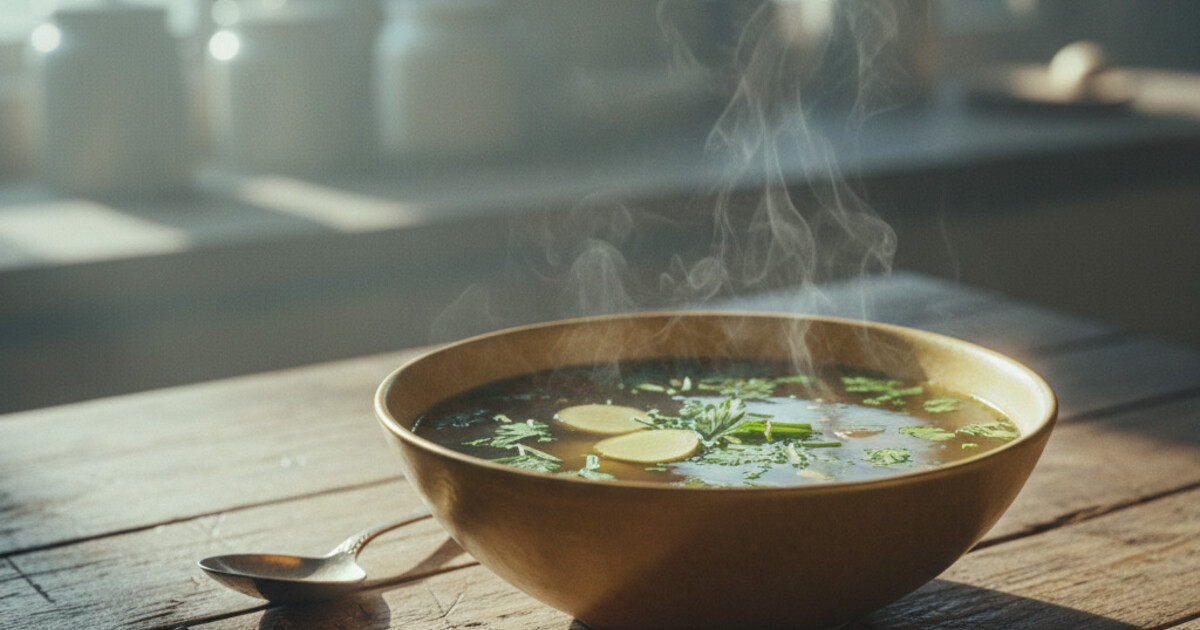
Bone broth has become a fixture in fasting communities. Some people keep a cup on hand for the long stretches between meals. Others use it on extended fasting days specifically for the sodium and minerals it carries. And plenty of people are just trying to figure out whether sipping it during the fasting window counts as breaking the fast.
The problem is that bone broth doesn't fit neatly into "breaks a fast" or "doesn't break a fast." It has calories. It has protein. And depending on why you're fasting, those two facts can matter a lot or barely at all.
Here's what you need to know.
Does bone broth break a fast? Technically, yes. A standard cup contains 40 to 50 calories and 6 to 9 grams of protein, enough to produce a small insulin response. For weight-loss fasting protocols like 16:8 and 18:6, small amounts won't derail fat burning. For autophagy-focused fasting, the amino acids signal the body to pause cellular repair.
Does Bone Broth Break a Fast?
The answer depends on how you define "fasting," and that definition varies more than most fasting content admits.
At its strictest, a fast means zero caloric intake. Bone broth has calories, so by that standard it breaks the fast. One cup of store-bought bone broth (8 ounces) typically runs 40 to 50 calories and contains 6 to 9 grams of protein, depending on how concentrated it is.
That's where the nuance starts.
Bone broth sits in a grey zone for intermittent fasting because it contains calories and protein, unlike plain water, black coffee, or plain tea. A standard 8-ounce cup carries 40 to 50 calories and 6 to 9 grams of protein, depending on how it's made. That protein breaks the strict definition of a fasted state: the amino acids in bone broth, particularly glycine and glutamine, stimulate a mild insulin response and activate mTOR, the cellular pathway that governs protein synthesis. When mTOR is active, autophagy (the cellular process that clears damaged proteins and cell debris) slows down. Research published in Cell Metabolism found that even modest protein intake during a fasting window measurably reduced autophagy markers. For weight loss, however, 40 to 50 calories won't disrupt fat burning in most 16:8 or 18:6 protocols. The caloric load is too small to flip the metabolic switch that fasting relies on. Bone broth is compatible with weight-loss fasting and incompatible with strict autophagy fasting.
If you're unsure about other drinks during your fast, the complete guide to what breaks a fast covers the full spectrum, from black coffee to chewing gum.
Bone Broth and Autophagy: Why Your Goal Changes Everything
Autophagy is the process where cells break down and recycle damaged components. It's triggered by nutrient deprivation, which is exactly what fasting creates.
For many people, triggering autophagy is the whole point of extended fasting. Research from Yoshinori Ohsumi, who won the 2016 Nobel Prize in cell biology for this work, showed autophagy ramps up significantly after 18 to 24 hours of fasting. The process is sensitive to amino acid availability.
The amino acids in bone broth, especially glutamine and glycine, are detected by the mTOR pathway as a sign that the body isn't in a nutrient-depleted state. mTOR activation is essentially the off switch for autophagy.
One cup of bone broth won't halt autophagy for hours. But it will dampen the process. For someone doing 20:4 or OMAD specifically to maximize cellular repair, drinking bone broth during the fast works against that goal.
For 16:8 fasting aimed at weight loss, this matters a lot less. The autophagy window in a 16-hour fast is shorter anyway, and the priority is fat burning, not cellular repair. Bone broth doesn't meaningfully interfere with that.
To understand exactly what your body is doing at each stage of a fast, the hour-by-hour breakdown of the stages of fasting covers when autophagy kicks in and how different inputs affect it.
Bone Broth During Extended Fasting: Where It Actually Helps
For fasts beyond 24 hours, bone broth shifts from grey area to genuinely useful.
Extended fasting depletes electrolytes faster than most people expect. Sodium drops as the kidneys excrete more during a prolonged fast. Potassium and magnesium follow. The symptoms are predictable: fatigue, headaches, muscle cramps, difficulty concentrating. Some people call it "fasting flu."
Bone broth addresses this directly.
A cup carries roughly 500 to 900 milligrams of sodium depending on the brand and recipe. It also contains smaller amounts of potassium and magnesium. That electrolyte profile maps closely to what gets depleted during a long fast.
For someone 24 or 36 hours into a water fast, a cup of bone broth can extend how long they can continue. The caloric hit (40 to 50 calories) is real, but it's a reasonable trade-off when the alternative is ending the fast entirely because of symptoms.
Bone broth also carries collagen, primarily as gelatin when cooked. Collagen doesn't raise blood glucose, and the research on whether collagen-derived amino acids trigger autophagy suppression is less clear than it is for leucine or complete protein sources.
For electrolyte management during shorter fasts, the guide to electrolytes while fasting covers all options, including zero-calorie electrolyte powders that won't affect your fasted state.
How to Use Bone Broth Without Derailing Your Fast
If you're going to drink bone broth during a fasting window, a few practical rules keep it from working against you.
Stick to 1 cup. One cup (8 ounces) is the practical upper limit for staying in fat-burning territory. Two cups doubles the protein and calorie load, which starts to look more like a small meal to your metabolism.
Plain broth only. Packaged broths sometimes add starch, sugar, or cream. Check the ingredient list. What you want: bones, water, vinegar, vegetables, salt. Any added carbohydrates will spike insulin more than the protein alone.
Time it strategically for autophagy. If you're doing extended fasting for cellular repair, push bone broth to the last 2 hours of your fast rather than the beginning. You'll still get the electrolyte benefit and hunger suppression, but you won't cut short the peak autophagy window that typically runs between hours 18 and 24.
Choose it for a reason. Bone broth makes the most sense when extended fasting is causing physical symptoms, specifically the electrolyte-depletion symptoms described above. If you're feeling fine and just want something warm, black coffee or plain herbal tea are cleaner choices that don't add any caloric load.
Don't use it as a crutch for shorter fasts. If a 16-hour fast has you reaching for bone broth at hour 12, the issue is probably that your eating window needs to shift or your last meal needs more fat and protein. Bone broth can help extend a fast, but if you need it regularly for a 16:8 protocol, something else is worth adjusting first.
How FastFocus Helps You Stay on Track
Knowing the rules is one thing. Following through for 16, 18, or 24 hours is another.
FastFocus is a fasting tracker built around certified protocols, including 16:8, 18:6, 20:4, 5:2, and OMAD. The visual timer shows exactly where you are in your current fast, which helps when you're 14 hours in and weighing whether to reach for bone broth or push through to your eating window.
The app tracks your fasting history and streaks over time. If you're consistently cutting your fast short at a certain hour, that pattern becomes visible. It shows you where the friction is and helps you decide whether adjusting your protocol makes more sense than fighting the same battle every day.
Smart notifications remind you when your fasting window starts and when your eating window opens, so you're not relying on mental tracking alone.
FastFocus is free on iOS and Android.
Frequently Asked Questions
Does bone broth spike insulin?
Yes, mildly. The protein in bone broth, particularly glycine and glutamine, produces a small insulin response. It's much lower than a protein shake or full meal, but it's not zero. For most weight-loss protocols, the response is too small to matter. For strict autophagy fasting, it's enough to affect the cellular repair process.
Can I drink bone broth during a 16:8 fast?
Yes, with caveats. One cup of plain bone broth during a 16:8 fasting window won't break fat burning for most people. The 40 to 50 calories and 6 to 9 grams of protein are unlikely to produce an insulin response significant enough to disrupt fat metabolism. If your goal is autophagy, stick to black coffee or plain water instead.
How many calories does bone broth have?
Store-bought bone broth typically runs 40 to 50 calories per 8-ounce cup. Homemade versions vary widely depending on bone concentration and cooking time. Some concentrated commercial broths run up to 70 or 80 calories per cup. Always check the label before using it during a fasting window.
Is bone broth better than an electrolyte powder during a fast?
They serve different needs. Zero-calorie electrolyte powders give you sodium, potassium, and magnesium without any caloric load. Bone broth gives you similar electrolytes plus protein and collagen, with 40 to 50 calories. For strict autophagy fasting, electrolyte powder is the cleaner choice. For extended fasting where hunger is a real problem, bone broth adds suppression that electrolyte powder doesn't.