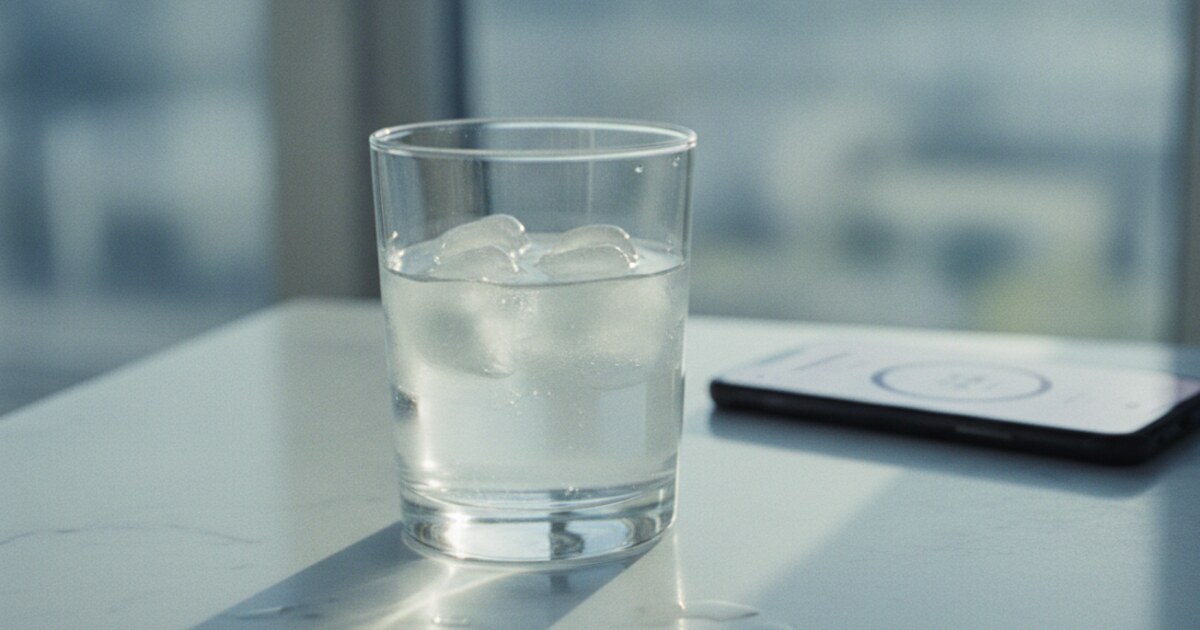
You're four hours into your fasting window, and the question sneaks in: can I drink water? Food is clearly off limits, but water feels different. Then you read something about electrolytes disrupting autophagy, or flavored water spiking insulin, and suddenly you're not sure.
Most of the confusion is unnecessary. The core answer is simple, but the details around flavored water, sparkling water, and electrolytes are worth understanding so you don't accidentally break your fast with something that looked harmless.
Yes, you can drink plain water while fasting. Water has zero calories, zero carbohydrates, and zero protein, so it produces no insulin response and doesn't interrupt ketosis or autophagy. Drinking water during intermittent fasting is not only allowed; most protocols require it. Fasting while dehydrated is harder, more uncomfortable, and counterproductive.
Why Plain Water Doesn't Break a Fast
A fast breaks when you consume something that triggers an insulin response or provides meaningful calories. Protein, carbohydrates, and fat all cause insulin to rise to varying degrees. Your body responds to energy intake by shifting out of the fasted state: pausing fat burning, interrupting ketosis, or blunting autophagy depending on your goal.
Plain water contains none of those things. It has zero calories, zero macronutrients, and produces no measurable hormonal response.
During intermittent fasting, plain water is unrestricted across every major protocol, including 16:8, 18:6, 20:4, 5:2, and OMAD. Water contains zero calories, zero grams of carbohydrates, and zero grams of protein; it triggers no insulin response. The mechanisms that make fasting effective (reduced insulin secretion, increased fat oxidation, and autophagy upregulation) proceed normally with water intake. Research by Longo and Mattson published in Cell Metabolism (2014) documents that these metabolic shifts were first observed using water fasting as the baseline condition, not dry fasting. Food normally contributes about 20% of total daily fluid intake, or roughly 400 to 500ml on a standard diet. When eating windows shrink, that food-sourced fluid disappears. Most fasting researchers and clinicians recommend 2.0 to 2.5 liters (about 8 to 10 cups) of fluids per day during fasting periods. Dehydration mimics the symptoms of caloric restriction: headaches, fatigue, and difficulty concentrating.
Water also doesn't trigger the cephalic phase insulin response (CPIR), the small insulin bump that some foods and sweet tastes can cause. That distinction matters when evaluating flavored drinks. Plain water bypasses every pathway that interrupts a fasted state.
How Much Water Should You Drink While Fasting?
The general recommendation during intermittent fasting is 2.0 to 2.5 liters (about 8 to 10 cups) of fluids per day. That tracks with standard hydration guidelines, but the context shifts during fasting: none of your fluid comes from food, so the full amount needs to come from what you drink.
A few practical targets:
- Start your fast with a full glass of water before sleep, and drink another first thing when you wake up. That covers 400 to 500ml before the day has started.
- Spread the rest across your fasting hours rather than gulping large amounts at once. Your kidneys can process roughly 0.8 to 1.0 liters per hour, and drinking faster won't help.
- Watch for dehydration signals: headaches, dark urine, fatigue, difficulty concentrating. These often get attributed to fasting, but they're frequently just dehydration.
One of the most common complaints during extended fasting is a fasting headache. A significant portion trace back to dehydration rather than caloric restriction, and they resolve with water, not food. If you hit hour 14 of a 16:8 fast with a dull throb behind your eyes, drink a large glass of water before concluding the fast is the problem.
What About Flavored, Sparkling, and Infused Water?
Plain water is unambiguously safe. Everything else needs a label check.
Sparkling water (plain carbonated): Safe. Carbon dioxide dissolved in water is metabolically inert: no calories, no carbohydrates, no insulin response. For a full breakdown of different brands and what to check on the label, see the guide on whether sparkling water breaks a fast.
Infused water (cucumber, mint, lemon slices): Generally safe. The trace flavor compounds and micronutrients that leach into the water are too small to register as meaningful calories. A glass with a few cucumber slices or a mint sprig won't break a fast for calorie-based or metabolic goals.
Electrolyte water: Depends on what's in it. Sodium and potassium added to water carry no calories and won't affect insulin. Many electrolyte powders and drinks, though, contain sugar, dextrose, or sweeteners. Check the label: zero calories and zero carbohydrates means you're safe. For a full guide on what's safe and what isn't, see the article on electrolytes while fasting.
Flavored water with sweeteners: Gray zone. Artificial sweeteners don't provide calories, but some research suggests certain ones (sucralose, aspartame) may trigger a minor cephalic insulin response. The evidence is mixed and drawn mostly from small studies. If your goal is metabolic fasting or weight loss, the risk is low. For strict autophagy, plain water is the cleaner choice.
Tonic water, coconut water, fruit-flavored beverages: These break a fast. Tonic water contains about 32g of sugar per 12 oz. Most coconut waters run 45 to 60 calories per serving. Any nonzero number under Total Carbohydrates or Calories on the label means the fast is broken.
Does Drinking Water Stop Autophagy?
No. Autophagy is cellular self-cleaning: your body breaks down damaged proteins and cell components and recycles them. It's upregulated during fasting when nutrient-sensing pathways (mTOR, AMPK) detect the absence of amino acids and glucose.
The studies documenting autophagy induction during fasting, including the work by Yoshinori Ohsumi that earned the 2016 Nobel Prize in Physiology or Medicine, used water fasting as the standard condition. Water fasting is the baseline in autophagy research precisely because water doesn't interfere with the process.
Hydration actually supports autophagy. The enzymatic processes involved in cellular cleanup require water to function. Dehydration slows enzyme activity broadly; it doesn't enhance autophagy, it compromises it. Claims that water stops autophagy aren't supported by the primary research literature.
Dry fasting (restricting water as well as food) is sometimes promoted as amplifying autophagy. The theory lacks robust human evidence and carries real dehydration risks, especially in extended fasts. For context on what actually breaks a fast and what doesn't, see the guide on what breaks a fast.
Practical Tips for Staying Hydrated During a Fast
Knowing water is safe is one thing. Actually drinking enough across a 16 or 18-hour window is another, especially when hunger signals that normally drive you toward the kitchen are muted.
A few habits that help:
- Keep a bottle visible. Out of sight, out of mind is real. A water bottle on your desk or counter removes the friction of walking to the kitchen for a refill.
- Drink before you're thirsty. Thirst is a late signal. By the time you notice it, you're already mildly dehydrated. In the later hours of a fasting window, proactive drinking beats reactive drinking.
- Use hunger as a hydration cue. Many early hunger signals during fasting are actually mild dehydration. When hunger hits at hour 10, drink a large glass of water first. It won't always suppress hunger, but it often takes the edge off for 20 to 40 minutes.
- Herbal teas count. Unsweetened herbal teas (peppermint, chamomile, ginger) are safe during fasting and add variety if plain water gets monotonous across a long window.
How FastFocus Keeps You on Track
Knowing you're at hour 12 of a 16-hour fast feels different from guessing where you are, and it changes how you approach the remaining hours.
FastFocus tracks your fasting window in real time with a visual timer and certified protocols built in: 16:8, 18:6, 20:4, 5:2, OMAD, and others. One tap starts your fast. Smart notifications throughout the window serve as natural check-ins, a good time to refill your bottle.
Fasting history and streak tracking let you see your patterns across days and weeks. FastFocus is free on iOS and Android, with no complicated setup required.
Frequently Asked Questions
Can I drink water during a 16:8 fast?
Yes. Plain water has zero calories and produces no insulin response, so it's safe at any point during a 16:8 fasting window. Most fasting protocols not only allow water but require it. Staying hydrated helps manage hunger and prevents common side effects like headaches and fatigue.
Does lemon water break a fast?
A small squeeze of lemon (about 5 to 10ml) adds roughly 1 to 3 calories and a negligible amount of carbohydrates. For most intermittent fasters, this won't interrupt the fast in any meaningful way. If your goal is strict autophagy, skip the lemon and stick to plain water.
Does water stop autophagy?
No. Autophagy research, including the studies that earned Yoshinori Ohsumi the 2016 Nobel Prize, uses water fasting as the baseline condition. Drinking water doesn't stop autophagy. Dry fasting is neither required for autophagy nor recommended, as it carries real dehydration risks.
Should I drink more water than usual while fasting?
Yes. Food normally provides about 20% of your daily fluid intake, roughly 400 to 500ml on a typical diet. When you skip meals, that water disappears too. To compensate, aim for 2.0 to 2.5 liters (8 to 10 cups) of fluids per day during fasting windows.
What about electrolyte water: does it break a fast?
Plain electrolyte water with only sodium and potassium and zero calories is safe during a fast. Be careful with sports drinks and flavored electrolyte mixes: many contain sugar or sweeteners that will break a fast. Check the label and aim for zero calories and zero carbohydrates.
Sources
- Effects of Intermittent Fasting on Health, Aging, and Disease — New England Journal of Medicine
- Fasting: Molecular Mechanisms and Clinical Applications — Cell Metabolism (PubMed)
- Intermittent Fasting: What Is It, and How Does It Work? — Johns Hopkins Medicine