You're halfway through a 16-hour fast and wondering whether your pre-workout creatine will undo your progress. It's a fair question. Creatine is one of the most studied supplements out there, but its relationship with fasting is still confusing for a lot of people.
The answer depends on what kind of creatine product you're taking and what your fasting goals are.
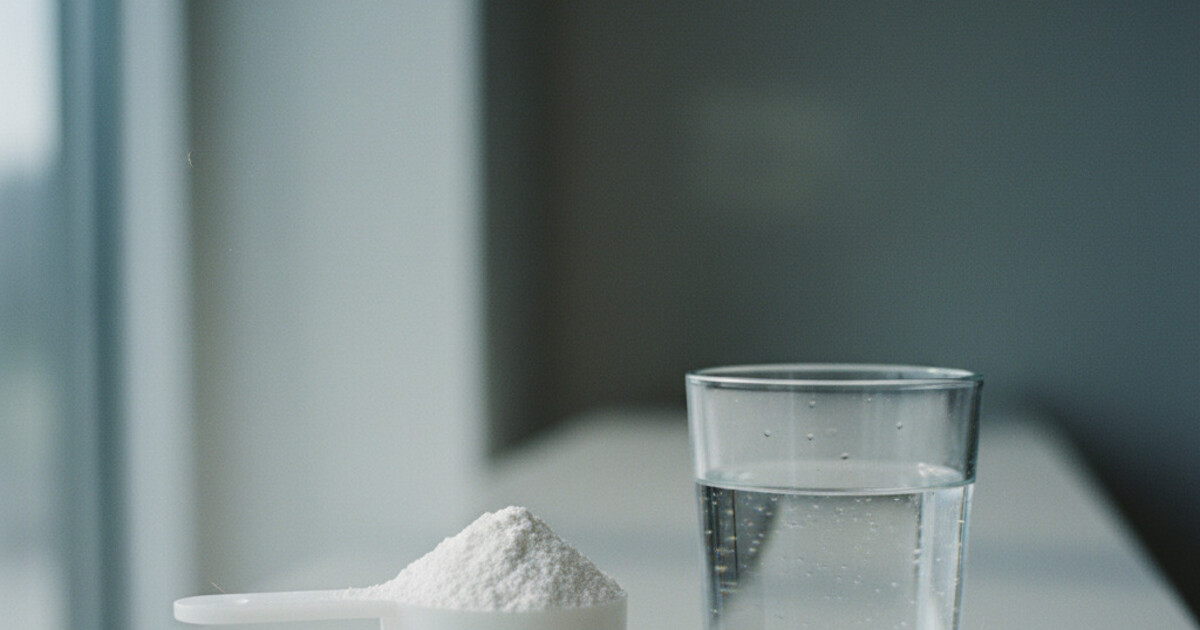
Does creatine break a fast? Pure creatine monohydrate powder has essentially zero calories and doesn't cause an insulin spike, so it won't break a standard intermittent fast. Most people can take plain creatine during their fasting window without disrupting fat burning or ketosis. Products with added sugar or carbohydrates are the exception. Those will break your fast.
What's Actually in Creatine
Creatine is a compound your body makes naturally from three amino acids: arginine, glycine, and methionine. Your liver and kidneys produce it; you also get small amounts from red meat and fish.
Creatine supplements aren't a macronutrient. They don't contain meaningful fat, protein, or carbohydrates. One teaspoon (5g) of pure creatine monohydrate has about 0-4 calories depending on the brand and lab measurement method. That's well below any threshold that would break a fast.
Your body doesn't need to digest creatine the way it digests food. It's absorbed through the intestine and stored in muscle cells as phosphocreatine, where it helps regenerate ATP (your cells' energy currency) during short, intense bursts of exercise.
None of that process triggers insulin or shifts your body out of a fasted state.
What Research Shows About Creatine and Fasting
Creatine supplementation doesn't affect blood glucose or insulin levels in healthy adults. A 2003 study published in the Journal of Strength and Conditioning Research found no insulin response to creatine supplementation in resistance-trained men. A 2021 review in Nutrients confirmed that creatine monohydrate is metabolically inert from an insulin-signaling perspective.
When you're fasting, your body is running on stored fat and ketone bodies rather than incoming glucose. Insulin is the switch: when it rises, fat burning pauses. Creatine doesn't flip that switch.
For people fasting primarily for weight loss or metabolic health, plain creatine is safe during the fasting window. It keeps your muscle stores topped up without interrupting the core metabolic benefits of fasting. Research from the International Journal of Sport Nutrition and Exercise Metabolism found that creatine levels in muscle can drop by up to 20% during extended fasting periods, which makes supplementation during fasting windows a practical strategy for people who train regularly. Maintaining adequate creatine stores supports workout performance without requiring you to eat first. You can train effectively in a fasted state without sacrificing your fasting window, and your muscles will have the phosphocreatine reserves they need for high-intensity work. This is especially relevant for people following 16:8 or 18:6 protocols who prefer to train in the morning before breaking their fast.
When Creatine Does Break a Fast
Not all creatine products are the same.
Creatine + carbohydrate formulas. Some products combine creatine with fast-digesting carbs (dextrose, waxy maize starch, or maltodextrin) to boost absorption. These typically contain 30-75 grams of carbohydrates per serving. A single scoop can pack 120-300 calories and cause a significant insulin spike. These definitely break a fast.
Flavored creatine powders with added sugars. Fruit punch creatine, grape creatine: check the label. If it contains sugar, it breaks your fast.
Pre-workout supplements containing creatine. Many pre-workouts bundle creatine with caffeine, beta-alanine, and sugar. A single serving might have 150-300 calories. Check the nutrition label before assuming it's fine during a fast.
Creatine capsules with fillers. Most capsule fillers (cellulose, gelatin) are calorie-free and fine. But some cheaper capsule products use maltodextrin as a filler, so check the label if you're using a budget brand.
The rule is simple: look at the nutrition facts. If it has zero or near-zero calories and zero sugars, it won't break your fast. If it has carbs or calories, it will.
Does Creatine Affect Autophagy?
Autophagy is your body's cellular cleanup process. It ramps up during fasting, clearing out damaged proteins and organelles. People who fast specifically for autophagy benefits tend to be stricter about what they consume during the fasting window.
Creatine's effect on autophagy is a more nuanced question.
Creatine is synthesized from amino acids, and amino acids are one of the signals that can suppress autophagy through the mTOR pathway. Pure creatine itself doesn't appear to activate mTOR in studies. But if your goal is strict autophagy fasting, some researchers recommend waiting until your eating window to take all supplements, just to be safe.
For practical fasting aimed at weight loss, metabolic health, or fat burning: creatine won't interfere. If you're fasting specifically for cellular repair and pushing for deep autophagy, consider taking creatine with your first meal to keep your fasting window as clean as possible.
Timing: When Should You Actually Take Creatine?
The old advice about "creatine timing windows" has mostly been walked back by research. Taking creatine consistently every day matters far more than when you take it.
A 2013 study in the Journal of the International Society of Sports Nutrition compared pre-workout vs. post-workout creatine and found minimal difference in muscle gains over time. Consistency was the main driver.
Given that, you have a few options:
Take creatine with your first meal. This is the simplest approach. Your eating window opens, you take your supplements with food, and you don't think about it during your fast. This works well for people who train during their eating window.
Take creatine during your fasting window before training. If you train fasted, plain creatine monohydrate in water is fine. Rinse your creatine powder into a glass of water and drink it 30-60 minutes before you train.
Take creatine at any consistent time. Because creatine builds up in muscle tissue over days and weeks, the daily dosing matters more than precise timing. Pick a time that fits your routine and stick to it.
One practical note: creatine pulls water into muscle tissue. When you first start supplementing, you might notice a slight weight increase of 1-2 kg.
That's water in the muscle cells, not fat. It doesn't affect fasting outcomes.
How FastFocus Helps You Train and Fast
If you're using creatine, you're probably training seriously. Combining fasted workouts with creatine supplementation is a popular strategy for lean muscle building, and it works well when your fasting windows are consistent.
FastFocus helps you structure your fasting window around your training schedule. The visual timer shows exactly where you are in your fast so you can plan workouts at the right time, whether you prefer training deep into a fasted state or right before you break your fast.
With protocols like 16:8, 18:6, and 20:4 built in, you can pick the fasting schedule that fits your training. The streak tracking keeps you consistent over the weeks it takes creatine to fully saturate your muscles. Download FastFocus free on iOS and Android to keep your fasting and training on schedule.
Frequently Asked Questions
Does creatine break a fast?
Pure creatine monohydrate has essentially zero calories and doesn't cause an insulin spike. It won't break an intermittent fast in any meaningful way. Products that combine creatine with sugar or carbohydrates will break your fast. Always check the nutrition label before taking anything during your fasting window.
Can I take creatine on an empty stomach?
Yes, but some people experience stomach discomfort when they take creatine without food. If plain creatine in water causes nausea, try splitting your dose or moving it to your eating window. Taking it with your first meal solves the issue for most people.
Does creatine affect ketosis?
Pure creatine monohydrate doesn't contain carbohydrates and won't knock you out of ketosis. Carb-loaded creatine transport products will. If you're following keto, stick to unflavored creatine monohydrate with no added ingredients.
Should I take creatine before or after a fasted workout?
Either works. Research shows timing matters less than consistency. If you train fasted, taking plain creatine 30-60 minutes before your workout is fine. You can also take it after training when you break your fast. Both approaches deliver the same long-term results.
Does creatine loading require breaking a fast?
Loading protocols (20g/day for 5-7 days) use higher doses to saturate muscles quickly. The creatine itself won't break your fast, but taking 4-5 doses per day is easier when split around meals. Standard maintenance dosing (3-5g/day) with your first meal works just as well.
The Bottom Line
Plain creatine monohydrate won't break your fast. It has no meaningful calories, causes no insulin response, and doesn't interrupt fat burning or ketosis. Take it during your fasting window before a workout or with your first meal. Either approach works.
Watch out for creatine products with added sugars, carbohydrates, or flavored formulas. Those will break your fast. Check the nutrition label: if you see carbs or calories, move it to your eating window.
To stay consistent with your intermittent fasting and training routine, track your fasting windows with FastFocus, free on iOS and Android. The one-tap timer and multiple certified protocols make it easy to time your training and supplements around your fast.