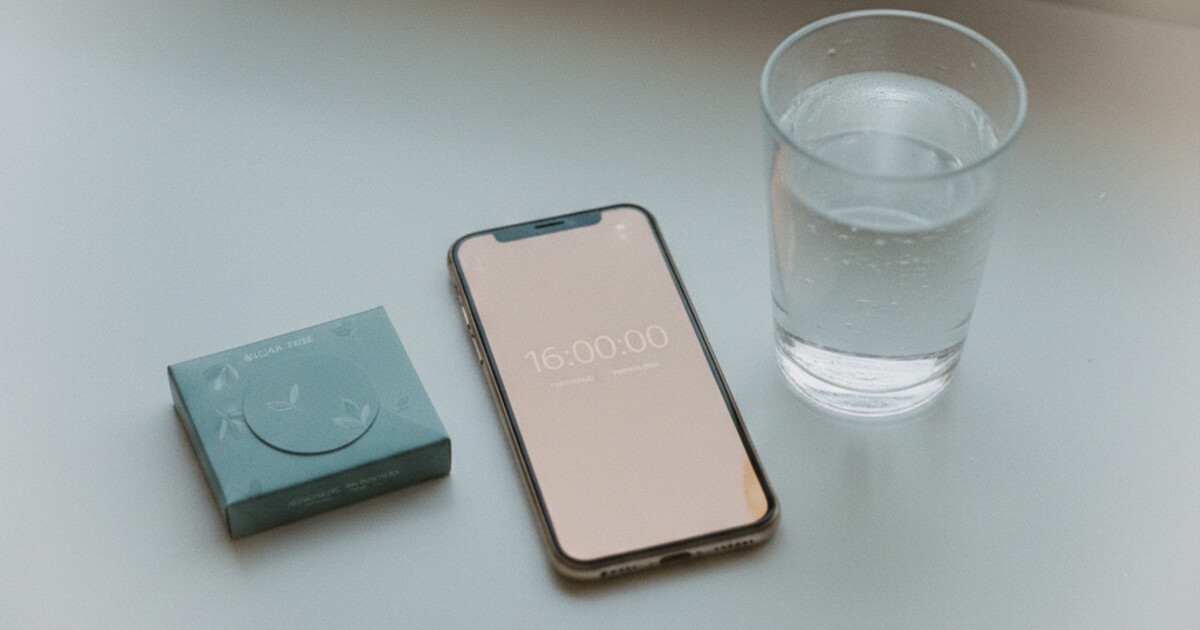
You're 13 hours into your fasting window and your mouth is going crazy. You want something — anything — to chew. There's a pack of sugar-free gum on your desk. One piece. Will it wreck your fast?
The answer depends on which gum you reach for. And there's one biological detail worth knowing before you pop that piece.
Does gum break a fast? Regular gum with sugar breaks a fast. Even a few pieces add 10 to 15 calories and trigger an insulin response. Sugar-free gum with artificial sweeteners like xylitol or aspartame contains 0 to 2 calories per piece and won't break a fast for most people. One caveat: chewing anything can produce a small cephalic phase insulin response, which matters mainly for strict therapeutic fasts.
What's Actually in Gum (The Numbers That Matter)
Two pieces of regular sugar-sweetened gum run 10 to 15 calories with 2 to 3 grams of sugar per piece. That's enough to trigger an insulin response and pull you out of your fasted metabolic state — the same logic as any other caloric intake during a fast.
Sugar-free gum is different:
- Xylitol-sweetened gum (like Spry or some Trident varieties): 2 calories per piece, glycemic index of 7 (extremely low)
- Aspartame-sweetened gum (like Extra): 0 to 1 calorie per piece
- Sorbitol-sweetened gum: 2.6 calories per piece, partially absorbed by your intestines
The practical question for fasting is whether sugar-free gum raises insulin enough to stop fat oxidation. For the most part, it doesn't. Most fasting researchers, including Dr. Jason Fung, use a 10-calorie threshold as the practical benchmark for what disrupts a fast. One or two pieces of any major sugar-free brand stays well under it.
Understanding what breaks a fast comes down to one question: does the intake raise insulin enough to pull your body out of the fasted state? For sugar-free gum, the caloric load of 0 to 2 calories per piece is too small to produce a meaningful insulin spike. Research on intermittent fasting protocols consistently uses a 10-calorie threshold as the benchmark below which insulin remains at baseline. This means standard sugar-free gum sweetened with xylitol, erythritol, or aspartame falls well within the safe zone. Someone doing a daily 16:8 or 18:6 protocol can chew one or two pieces during their fasting window without breaking their fast or disrupting fat-burning. The same doesn't apply to regular gum. Even 2 to 3 pieces of sugar-sweetened gum deliver 10 to 15 calories and 4 to 6 grams of sugar, which is enough to trigger an insulin response and exit the fasted state within 15 to 20 minutes of consumption. Regular gum belongs in the eating window, not the fasting window.
One ingredient to watch out for in "sugar-free" gum is sorbitol. Unlike xylitol or aspartame, sorbitol gets partially absorbed in your small intestine at roughly 2.4 calories per gram. One or two pieces is fine. Going through half a pack — 6 to 8 pieces — could put you near 15 to 20 calories from sorbitol alone.
Does Sugar-Free Gum Break a Fast?
For most intermittent fasting protocols, sugar-free gum doesn't break a fast.
Check the label on your gum and look for the sweetener type:
- Safe (zero caloric impact): aspartame, sucralose, stevia, erythritol, acesulfame potassium (Ace-K)
- Low-impact (minimal caloric impact): xylitol (2 cal/piece), mannitol
- Watch your quantity: sorbitol (2.6 cal/piece, partially absorbed)
Brands worth knowing:
- Extra Spearmint: 0 calories, aspartame — safe in any reasonable amount
- Trident Original: 2 calories, xylitol — safe in 1 to 2 pieces
- Spry xylitol gum: 1.5 calories — safe in 1 to 2 pieces
- Dentyne Ice: check the label (some varieties use sorbitol, some use aspartame)
The practical rule: 1 to 2 pieces of any major sugar-free brand, once during a fast, won't break it. Chewing through an entire pack is a different story, especially with sorbitol-based gum.
For a full breakdown of what does and doesn't count during a fast, the what breaks a fast guide covers the same 10-calorie logic across beverages, supplements, and other common questions.
The Cephalic Phase Insulin Response
Here's the nuance that doesn't show up in most fasting articles.
When you chew gum, your brain detects sweetness and prepares your body to receive food. This triggers what researchers call the cephalic phase insulin response (CPIR): a small, pre-emptive insulin spike that happens before food actually enters your bloodstream.
How large is this response? Small. Studies using sugar-free sweeteners found CPIR raises insulin by roughly 10 to 15% above baseline for about 10 to 15 minutes. Compare that to eating a meal, which raises insulin 200 to 400% above baseline.
For someone doing daily 16:8 fasting for weight loss or metabolic health, a 10% insulin bump from chewing gum isn't going to meaningfully interrupt fat oxidation. Your body handles larger insulin swings from stress hormones naturally throughout the day.
CPIR matters more for people on strict extended fasts (24 hours or longer), those fasting under medical supervision for therapeutic reasons, or anyone doing a strict metabolic reset where every variable counts. For standard daily fasting, the cephalic phase response from sugar-free gum is not a practical concern.
When Gum Can Help During a Fast
Used thoughtfully, sugar-free gum has a few real benefits during a fasting window.
It cuts hunger. Chewing sends a signal to your digestive system that food is coming. That signal temporarily suppresses ghrelin, your hunger hormone. A piece of gum can quiet a growling stomach for 20 to 30 minutes — enough time to push through to your eating window.
It fights fasting breath. After 16 or more hours without food, your body shifts into ketosis. Ketone production can cause an acetone-like taste in your mouth that's hard to ignore. Sugar-free peppermint or spearmint gum handles this without breaking your fast.
It reduces the urge to snack. Oral stimulation satisfies some of the habitual "I want something" feeling that shows up during the fasting window. If the alternative is actually eating something, gum wins.
It supports oral health. Xylitol specifically has well-documented cavity-fighting properties. It inhibits Streptococcus mutans, the bacteria responsible for tooth decay. During a fast, when saliva flow is slightly reduced, xylitol gum helps maintain oral pH and protect your teeth.
One thing gum won't do: replace hydration. If you're reaching for gum because you feel lousy and haven't had enough water, drink first. Dehydration is one of the most common causes of fasting headaches, and no amount of gum fixes that.
If you're in the early stages of fasting and finding hunger harder to manage, the intermittent fasting for beginners guide covers the first few weeks in detail, including which hunger strategies actually work.
How FastFocus Helps You Track Your Fast
Knowing whether gum breaks your fast is useful. Knowing exactly where you are in your fasting window is what keeps you consistent.
FastFocus gives you a real-time countdown timer so you always know how many hours remain in your current fast. When that gum craving hits at hour 14, you can check your timer and see you've got 2 more hours until your eating window opens. That context makes it easier to hold on.
The app tracks your full fasting history with detailed statistics and progress charts. You can see your streaks, your longest fasts, and how consistent you've been week over week. FastFocus includes certified protocols like 16:8, 18:6, 20:4, and OMAD, all built on science-backed timing. Smart notifications alert you when your fasting window is about to close and when it's time to eat.
You can also connect with other fasters through FastFocus's community features. Sometimes you just need to see that someone else is sitting at hour 14 with the same cravings.
Download FastFocus on iOS or Android to start your next fast with a plan behind it.
Frequently Asked Questions
Does chewing gum break a fast?
Regular gum with sugar breaks a fast. Sugar-free gum with artificial sweeteners like aspartame, sucralose, or xylitol contains 0 to 2 calories per piece and won't break a fast for most people doing standard intermittent fasting. Chewing does produce a small cephalic phase insulin response, but the effect is too minor to disrupt fat oxidation during normal daily fasting protocols.
What gum can you chew while fasting?
Any major sugar-free brand works. Extra Spearmint (aspartame, 0 calories), Trident (xylitol, 2 calories), and Spry xylitol gum are all safe in 1 to 2 pieces. Check the label and avoid anything with sugar, dextrose, corn syrup, or high-fructose corn syrup listed in the ingredients.
Does nicotine gum break a fast?
Nicotine gum is sugar-free but typically uses sorbitol as a sweetener. One to two pieces stays under 5 calories, which shouldn't break a standard intermittent fast. The nicotine itself doesn't affect insulin or caloric intake. Check the specific brand's label for the calorie count per piece.
Can xylitol in gum spike insulin?
Xylitol has a glycemic index of 7 (glucose is 100), so its direct effect on insulin is very low. A few pieces of xylitol gum won't produce a meaningful insulin spike. Some people with very sensitive insulin regulation notice mild effects, but for most people on standard fasting protocols, xylitol gum is safe.
Does gum break a 16:8 fast?
Sugar-free gum doesn't break a 16:8 fast. For a 16-hour fasting window focused on metabolic health or weight loss, 0 to 2 calories from a piece of gum is too small to matter. Stick to sugar-free varieties, keep it to 1 to 2 pieces, and you won't affect your results.