People trying intermittent fasting for the first time often have one big fear: that skipping meals will put their body into "starvation mode" and slow their metabolism for good. It's a reasonable concern if you've heard it enough times.
The problem is that fasting and chronic calorie restriction are not the same thing. They trigger different hormonal responses, different adaptations, and different long-term outcomes. The research on fasting and metabolism over the past decade points in a different direction than most people expect.
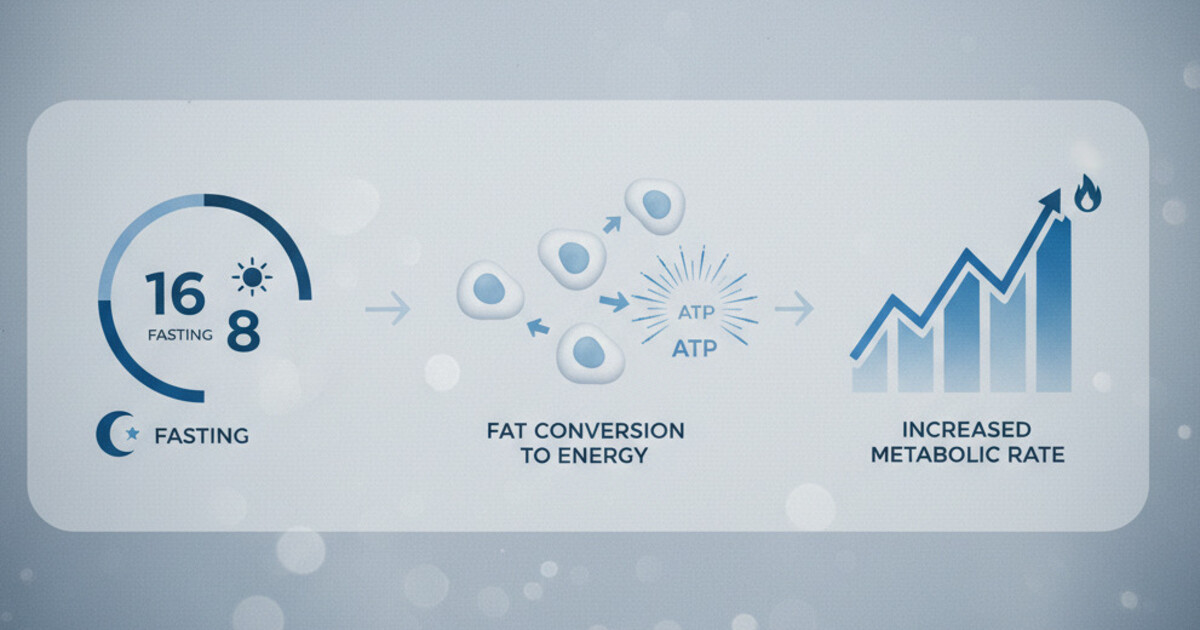
Short-term fasting raises metabolic rate by 3.6-14%, driven by increased norepinephrine secretion. Standard intermittent fasting protocols don't slow your metabolism the way chronic calorie restriction does. The metabolic slowdown people fear comes from months of sustained low-calorie intake, not from daily 16-24 hour fasting windows.
What Happens to Your Metabolism When You Start Fasting
When you stop eating, your body doesn't shift into conservation mode right away. It ramps up.
Within the first 24 hours, norepinephrine (also called noradrenaline) levels rise sharply. Norepinephrine is the hormone that signals fat cells to release stored energy. This hormonal surge cranks up resting metabolic rate. Studies measuring metabolic rate during short-term fasting show increases of about 3.6% at 48 hours, rising to around 14% at 72 hours.
Growth hormone also spikes during fasting. In men, GH can increase by 5x within the first 24 hours. In women, the increase is more variable but still significant. Growth hormone helps preserve lean muscle mass and drives fat oxidation, both of which keep metabolic rate from dropping.
After about 12-16 hours without food, liver glycogen stores run out. Your body shifts its primary fuel source from glucose to fat. This transition is covered in detail in the stages of fasting guide.
When you fast on a regular schedule, your metabolism builds the ability to switch between glucose and fat more efficiently. Researchers call this metabolic flexibility, and it's one of the key adaptations that separates intermittent fasting from general calorie restriction. A 2020 study from the Salk Institute found that people following a time-restricted eating protocol increased fat oxidation by 22% compared to a matched group on a standard calorie-restricted diet eating across a longer daily window. Their total calorie intake was similar. The fasting window itself changed how their bodies used fuel. Intermittent fasting trains the body to access stored fat more readily, improve insulin sensitivity, and reduce fasting insulin levels, all of which produce a more efficient metabolic state rather than a slower one. Insulin sensitivity matters because lower baseline insulin means more time spent in fat-burning mode between meals. These adaptations build over weeks of consistent fasting, which is why showing up to your protocol daily matters more than any single fasting day.
The Starvation Mode Myth: Does Fasting Slow Metabolism Long-Term?
Metabolic adaptation is real. When the body is underfed for long periods, it cuts metabolic rate to match available energy. This is what happens on crash diets, extremely low-calorie plans, and prolonged restriction at 500-800 calories per day for months.
Intermittent fasting doesn't work this way. During a 16-24 hour fast, you're not in a sustained calorie deficit the way a crash diet creates. You're compressing your eating window, but most people eating normally during that window still hit their calorie targets. The body doesn't read a 16-hour fast as famine.
The key distinction is duration and degree. A study published in the journal Obesity in 2016 found no statistically significant metabolic slowdown in participants after 8 weeks of alternate day fasting. A 2019 review in the New England Journal of Medicine looking at intermittent fasting research found that IF preserved lean muscle mass and metabolic rate better than continuous calorie restriction over comparable time periods.
Where fasting can slow metabolism: very long fasts (3+ days), very low calorie intake during eating windows, or frequent extended fasts without adequate protein recovery. Standard protocols like 16:8 or 18:6 don't fall into this category for most people. For more on what typical progress looks like over time, the intermittent fasting results guide covers week-by-week changes.
Fasting vs. Calorie Restriction: The Metabolic Difference
Chronic low-calorie dieting is the most reliable way to slow your metabolism. When your body gets 1,200 calories a day for months, it adjusts. It lowers thyroid hormone output, reduces body temperature, decreases drive for physical activity, and cuts the energy cost of normal bodily functions. Researchers call this adaptive thermogenesis.
Fasting doesn't trigger the same response. A 2022 study comparing intermittent fasting to continuous calorie restriction found that fasting maintained resting metabolic rate significantly better over 6 months, even when both groups lost the same amount of weight. The researchers attributed this partly to fasting's effect on norepinephrine, which stays elevated during fasting windows, and partly to preserved muscle mass.
The practical outcome: if you lose 15 pounds through six months of calorie restriction, your metabolism may end up 200-300 calories per day lower, making weight maintenance harder. Lose the same amount through intermittent fasting while eating normally during your window, and the metabolic drop is generally smaller.
For a deeper look at why this matters for long-term fat loss, the fasting for weight loss guide covers the evidence on fat loss mechanisms and how to make them work.
Which Fasting Protocols Have the Best Metabolic Effects
Not all fasting schedules produce the same metabolic outcomes.
16:8 and 18:6 fasting work well metabolically because they allow normal calorie intake during the eating window. Metabolic rate stays elevated during the fasting portion due to norepinephrine, and adequate protein during the eating window preserves muscle mass. These are the most studied protocols for metabolic outcomes and the most sustainable for most people.
5:2 fasting (eating normally for 5 days, restricting to 500-600 calories on 2 non-consecutive days) shows mixed results. The two low-calorie days can trigger some adaptive thermogenesis, but the 5 normal days help counteract it. Studies over 12-24 weeks generally show metabolic preservation.
Alternate day fasting has the strongest evidence for metabolic preservation compared to calorie restriction over the same period. It's more demanding than 16:8 for most people, but the research consistently shows better outcomes for resting metabolic rate than daily mild restriction.
Extended fasting (48-72 hours) produces the strongest short-term metabolic boost from norepinephrine, but muscle preservation becomes a concern if done frequently without adequate protein recovery during eating periods.
For most people starting out, 16:8 is the right choice. It's sustainable, it pairs with normal daily patterns, and the intermittent fasting benefits guide covers the broader health outcomes beyond metabolism.
How FastFocus Helps You Stay Consistent
The metabolic benefits of fasting don't show up after one day. They build over weeks of consistent practice.
FastFocus tracks your fasting timer in real time so you always know where you are in your window. Start a certified protocol like 16:8, 18:6, or OMAD with one tap, and the app handles the countdown. Fasting history and streak tracking let you see your consistency over time, which is exactly what matters for metabolic adaptation.
You can also log your weight directly in the app to track how body composition shifts as metabolic flexibility improves. Download FastFocus free on iOS and Android.
Frequently Asked Questions
Does intermittent fasting slow your metabolism?
Standard intermittent fasting protocols (16:8, 18:6, 5:2) don't slow metabolism. Short-term fasting raises resting metabolic rate by 3.6-14% due to increased norepinephrine. Metabolic slowdown is associated with sustained, severe calorie restriction over months, not with daily fasting windows.
How does fasting affect insulin and fat burning?
Fasting lowers insulin levels, which allows the body to access stored fat as fuel. Regular fasting improves insulin sensitivity over time, meaning the body handles carbohydrates more efficiently and spends more time in fat-burning mode between meals. Lower fasting insulin is one of the clearest markers of improved metabolic health.
Does OMAD slow your metabolism?
OMAD (one meal a day) is a 23:1 fasting protocol. Done with adequate calorie and protein intake in the single meal, it generally doesn't cause metabolic slowdown. The concern arises when the one meal doesn't meet protein needs, leading to muscle loss, which does reduce metabolic rate. Protein intake is critical for any extended fasting protocol.
How long before fasting improves your metabolism?
Norepinephrine-driven metabolic increases happen within the first 24-48 hours of any fast. Longer-term improvements to metabolic flexibility and insulin sensitivity typically show up after 4-8 weeks of consistent fasting. Most people notice changes in energy levels and fat burning within 2-3 weeks of sticking to a regular protocol.
Can fasting help reverse metabolic slowdown from dieting?
Research suggests intermittent fasting can help restore metabolic rate after periods of calorie restriction by normalizing norepinephrine and thyroid hormone levels. A 2020 case study found improvements in resting metabolic rate after 12 weeks of 16:8 fasting in participants with metabolic adaptation from prior low-calorie dieting. It's a promising area with more research still coming.
The Bottom Line
Short-term fasting increases metabolic rate. Consistent fasting builds metabolic flexibility. And intermittent fasting preserves lean muscle and metabolic rate better than traditional calorie restriction over comparable time periods.
The metabolic slowdown people fear from fasting actually comes from prolonged, severe calorie cutting. Done right, fasting is one of the more metabolically sound approaches to managing body composition.
If you want to track whether regular fasting is improving your metabolism, start by tracking your protocol. FastFocus is free on iOS and Android and gives you the fasting timer, history, and streaks to stay consistent.