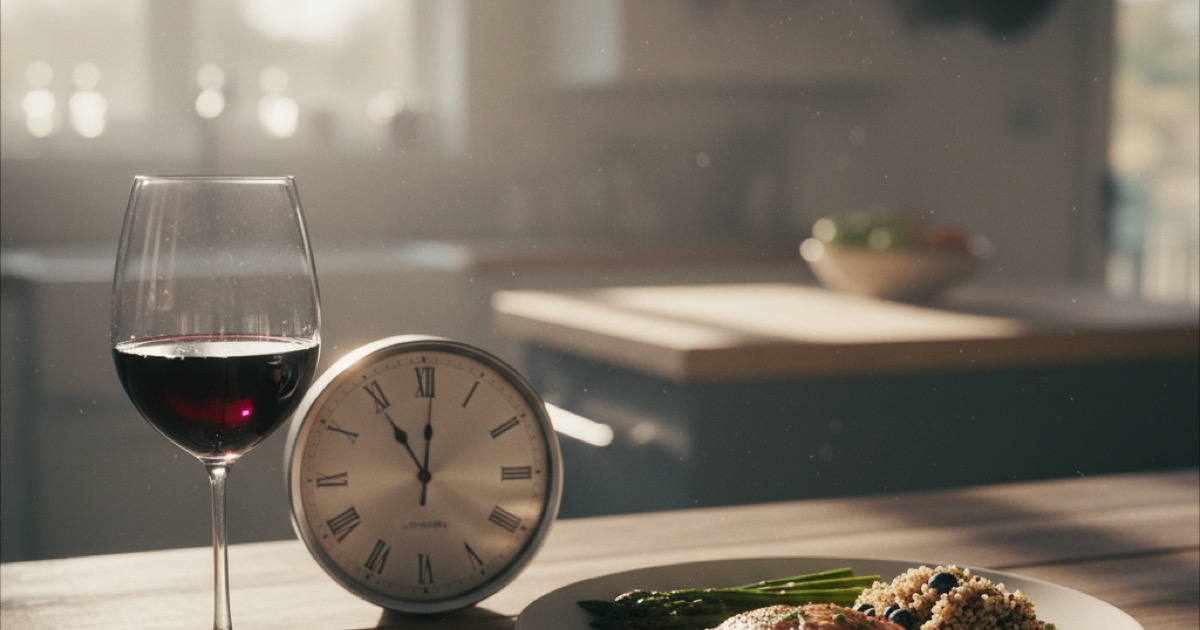
So you've started intermittent fasting and you're seeing results. The weight is shifting, your energy feels steadier, and your routine finally clicks. Then Friday night rolls around. Friends want to grab drinks. And suddenly you're wondering: can I actually have a beer without blowing this whole thing up? The truth about intermittent fasting and alcohol isn't as black and white as you might think.
Can you drink alcohol while intermittent fasting? Yes, but only during your eating window. Any alcoholic drink contains calories, so it will break your fast. During your eating window, moderate alcohol (1 drink for women, 2 for men) won't cancel your fasting benefits, though it can slow fat burning for several hours while your body processes the ethanol first.
How Intermittent Fasting and Alcohol Interact in Your Body
Your body treats alcohol differently than other calories. When you drink, your liver drops everything else to metabolize the ethanol. Fat burning pauses. Protein synthesis slows down. Your body essentially hits a detour sign and reroutes all its energy toward processing that drink.
During a fast, your body shifts into a fat-burning state after roughly 12 hours without food. Insulin levels drop, stored glucose gets used up, and your cells start pulling energy from fat reserves. This metabolic switch is one of the core reasons intermittent fasting works for weight loss and cellular health. Alcohol disrupts this process in a specific way: it doesn't just add calories, it changes your metabolic priority queue. Research published in the American Journal of Clinical Nutrition found that ethanol suppresses fat oxidation by approximately 73%. Your liver can only process about 1 standard drink per hour, and during that entire window, fat metabolism stays on hold. This means a single glass of wine doesn't just cost you the 125 calories on the label. It also pauses the fat-burning benefits you've been building through your fast, typically for 2 to 4 hours depending on body weight and liver function.
That doesn't mean you can't drink at all. It means timing and quantity matter a lot more than you'd expect.
Does Alcohol Break a Fast?
Yes. Full stop. Any drink with calories breaks your fast, and all alcoholic beverages contain calories. Even a shot of vodka (roughly 97 calories) triggers an insulin response and pulls your body out of the fasted state.
If you want to know more about what counts, check out our full guide on what breaks a fast. The short version: if it has calories, it breaks your fast.
This is why the "when" matters so much. Save your drinks for your eating window and you'll keep your fasting hours clean.
Best and Worst Alcoholic Drinks for Intermittent Fasting
Not all drinks hit the same. If you're going to have alcohol during your eating window, some choices are far kinder to your progress than others.
Better choices
- Dry red or white wine (120-130 calories per 5 oz glass, minimal sugar)
- Spirits neat or on the rocks (vodka, gin, tequila, whiskey: 95-105 calories per shot, zero carbs)
- Hard seltzer (typically 90-110 calories, low sugar)
- Light beer (90-110 calories per 12 oz)
Worse choices
- Cocktails with syrup or juice (margaritas, pina coladas: 300-500 calories each)
- Craft IPAs and stouts (200-350 calories per pint)
- Dessert wines and ports (high sugar, 150-200 calories per small pour)
- Premixed canned cocktails (often loaded with added sugars)
The pattern is simple. The fewer added sugars and mixers, the less damage to your fasting goals.
Intermittent Fasting and Alcohol: 6 Practical Tips
You don't have to choose between a social life and your fasting routine. Here's how to handle both.
1. Always drink during your eating window
This is the non-negotiable rule. If you're on a 16:8 schedule and your eating window runs from noon to 8 PM, have your drink within those hours. Drinking during your fasting window resets the clock on all the metabolic benefits you've been building.
2. Eat before you drink
Drinking on an empty stomach (especially after hours of fasting) hits harder and faster. Your body absorbs alcohol more quickly without food to slow it down. Grab a meal with protein and healthy fats first. Your liver will thank you, and you'll naturally drink less.
3. Stick to 1 to 2 drinks max
Moderate drinking and intermittent fasting can coexist. Heavy drinking can't. Beyond 2 drinks, you're looking at seriously disrupted sleep, increased appetite the next day, and a longer pause on fat burning. If you're fasting for weight loss, those weight loss benefits erode quickly with excess alcohol.
4. Hydrate between drinks
Alcohol is a diuretic. It pulls water from your body. During fasting periods, you're already being more mindful about hydration. Alternate each alcoholic drink with a full glass of water. You'll feel better the next morning and your fasting day won't start with a dehydration headache.
5. Skip the sugary mixers
A vodka soda with lime runs about 97 calories. A vodka cranberry jumps to 230. The mixer is where the real caloric damage hides. Use sparkling water, a squeeze of citrus, or drink spirits neat.
6. Don't extend your eating window to fit drinks in
It's tempting to push your eating window later to accommodate evening drinks. Resist that urge. Shifting your window throws off your routine and can mess with your sleep quality. If dinner plans run late occasionally, that's life. But don't make it a habit. Consistent fasting windows are what drive results over time.
How Alcohol Affects Your Fasting Goals
The impact depends on what you're fasting for.
Weight loss
Alcohol adds empty calories and pauses fat burning. A couple of drinks per week probably won't stall your progress. Drinking every night likely will. Alcohol also lowers inhibitions around food, so late-night snacking becomes a real risk after a few drinks.
Autophagy and cellular repair
If you're fasting for the deeper cellular benefits (like autophagy during the later stages of fasting), alcohol works against you. Ethanol creates oxidative stress, which is the opposite of what your cells need during repair mode. For autophagy-focused fasters, less is definitely more.
Sleep quality
Here's one people often miss. Alcohol fragments your sleep, reducing the deep and REM stages your body needs for recovery. Since intermittent fasting and sleep are deeply connected (poor sleep raises hunger hormones and tanks willpower), drinking can create a domino effect that makes your next fasting day harder than it needs to be.
Gut health
Fasting gives your digestive system a break. Alcohol does the opposite, irritating the gut lining and disrupting your microbiome. If gut health is part of your fasting motivation, keep alcohol to a minimum.
Common Mistakes When Mixing Fasting and Alcohol
These are the traps people fall into most often.
Drinking during the fasting window "because it's zero carb." Zero carb doesn't mean zero calories. Spirits still have calories and will break your fast.
Compensating by skipping meals. Some people skip food to "save" calories for alcohol. This backfires. You'll get drunk faster, make worse food choices later, and your body misses out on actual nutrition during your limited eating window.
Binge drinking on weekends. A week of disciplined fasting can be undone by a Saturday night of heavy drinking. The calorie surplus, sleep disruption, and next-day appetite surge create a cycle that's hard to recover from. For more pitfalls to watch for, see our guide on intermittent fasting mistakes.
Ignoring how you feel the next day. Pay attention to your body. If your fasting day after drinking feels significantly harder (more hunger, less focus, low energy), that's useful data. Adjust accordingly.
Frequently Asked Questions
Can I drink wine during my fasting window?
No. Wine contains calories (about 120-130 per glass), so it will break your fast. Save wine for your eating window. During fasting hours, stick to water, black coffee, or plain tea.
Will one beer ruin my intermittent fasting results?
One beer during your eating window won't ruin your progress. It temporarily pauses fat burning for a few hours, but your overall fasting benefits stay intact if it's occasional and moderate. Consistency over weeks matters more than one drink.
How long after drinking alcohol does fat burning resume?
Your liver processes about 1 standard drink per hour. Fat burning typically resumes 2 to 4 hours after your last drink, depending on how much you consumed and your body weight. The more you drink, the longer the pause.
Is it safe to drink alcohol after a 16-hour fast?
It's safe, but be careful. After 16 hours without food, your stomach is empty and alcohol absorbs much faster. Eat a solid meal with protein and fat before your first sip. Don't drink on a completely empty stomach after a long fast.
What's the best alcohol to drink while intermittent fasting?
Clear spirits (vodka, gin, tequila) with soda water are the lowest-calorie option at around 95-100 calories. Dry wine is another good choice. Avoid sugary cocktails, sweet wines, and heavy craft beers, which pack in extra calories and sugar.
The Bottom Line
Intermittent fasting and alcohol can coexist if you're smart about it. Drink during your eating window, keep it moderate, choose lower-calorie options, and eat real food first. You don't have to give up social drinking to see results from fasting.
The key is consistency with your fasting schedule. If tracking your fasting windows and staying on top of your routine feels tricky (especially on weekends), the FastFocus app can help. Set your protocol, start your timer with one tap, and let streak tracking keep you accountable, even when Friday night gets interesting. Available on iOS and Android.