You're two hours into a 16:8 fast when the question hits: does this herbal tea count? What about sparkling water? Someone online swore diet soda was fine. Someone else insisted even black coffee spikes insulin. The question of what you can drink while fasting comes up constantly, and the answers vary enough to be genuinely confusing.
The core answer is simpler than most guides make it. The nuances around diet soda, bone broth, and flavored waters are worth understanding. Here's a full breakdown: safe drinks, fast-breakers, and the gray zone drinks that genuinely divide the fasting community.
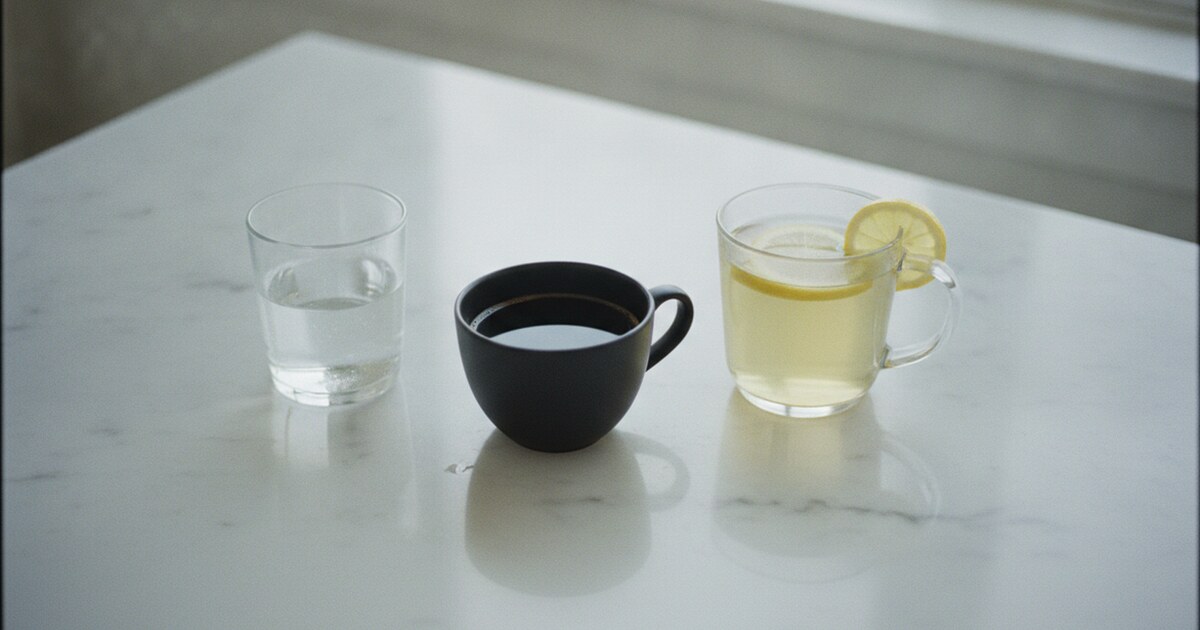
The safest drinks during intermittent fasting are water, plain black coffee, and unsweetened tea. All three have zero or near-zero calories and produce no meaningful insulin response. Plain sparkling water and small amounts of lemon water (under 5 calories per serving) are also safe for most fasting goals. Anything sweetened, milked, or over 5 calories per serving will break your fast.
What "Breaking a Fast" Actually Means
A fast breaks when your body detects energy intake that triggers an insulin response. Protein and carbohydrates are the main triggers; both cause insulin to rise in proportion to how much you consume. Fat causes a smaller bump. Zero-calorie drinks that produce no insulin response don't interfere with fasting.
The threshold for "breaking" your fast shifts depending on your goal.
- Fat burning and weight loss: Roughly 5 calories per serving is the practical threshold. Most zero-calorie drinks clear this easily.
- Ketosis: Same calorie range, but watch carbohydrates specifically. Stay under 1 to 2 grams of carbohydrates per serving.
- Autophagy: The strictest goal. Even small amounts of protein can slow autophagy by activating mTOR, the nutrient-sensing pathway that autophagy depends on being suppressed. For strict autophagy, plain water is the cleanest choice.
"Can I drink this while fasting?" really means "what am I fasting for?" That's the lens to apply to everything below. For a detailed breakdown of what triggers each of these mechanisms, see the guide to what breaks a fast.
Safe Drinks While Fasting
During intermittent fasting, safe drinks share one trait: zero or near-zero calories with no meaningful insulin response. Water is unrestricted across every protocol, from 16:8 to extended 72-hour fasts. Plain black coffee (2 to 5 calories per 8-oz cup) doesn't meaningfully trigger insulin release in healthy adults. Unsweetened black, green, and herbal teas work for the same reason: no calories, no carbohydrates. Plain sparkling water (no sweeteners, no flavoring) is metabolically inert. A small amount of lemon juice (5 to 10ml) adds roughly 1 to 3 calories, unlikely to interrupt metabolic fasting for most people. Diluted apple cider vinegar (1 to 2 tablespoons in water) falls under 5 calories and is commonly used in fasting windows. Plain electrolyte water with only sodium and potassium, zero carbohydrates and zero sugar, is also safe. Sweetened drinks, milk, juice, regular soda, and most sports drinks carry enough calories or carbohydrates to break a fast.
Water
Plain water has zero calories, zero macronutrients, and produces no insulin response. Every major fasting protocol permits it freely, across 16:8, 18:6, OMAD, and multi-day extended fasts. Research on intermittent fasting published in the New England Journal of Medicine (Mattson et al., 2019) documented fat oxidation and autophagy upregulation in protocols that included unrestricted water intake. That's the baseline condition these benefits were measured against.
Food normally contributes about 20% of daily fluid intake (roughly 400 to 500ml on a standard diet). When eating stops, that fluid source disappears. Aim for 2.0 to 2.5 liters (8 to 10 cups) of total fluids per day across your fasting window to compensate. For more on sparkling water, flavored water, and electrolyte water, see the full guide to drinking water while fasting.
Black Coffee
Plain black coffee has 2 to 5 calories per 8-oz cup, well under the threshold that triggers a meaningful insulin response. It's safe during a fast and may support fasting goals: caffeine has a mild appetite-suppressing effect and can increase fat oxidation during the fasting window.
The line shifts when you add calories. Milk, cream, sugar, or flavored syrups push the cup above the 5-calorie threshold. A tablespoon of heavy cream adds about 50 calories. That's not a large insulin spike, but it's not zero-calorie either. Some fasters allow a small splash; strict fasters skip it. For a full breakdown including MCT oil, collagen powder, and commercial creamers, see does coffee break a fast.
Unsweetened Tea
Plain brewed tea (black, green, white, oolong, herbal) has zero calories when served without milk or sweeteners. It's safe during a fast across all fasting goals, including strict autophagy.
Green tea may offer a modest additional benefit during fasting: catechins have been linked to increased fat oxidation in small studies, though effect sizes are modest. The practical value is variety: tea gives you flavored hot drinks during long fasting windows without any metabolic cost. For a breakdown of matcha, chai, iced tea, and specific herbal blends, see does tea break a fast.
Sparkling Water
Plain carbonated water (no sweeteners, no flavoring, no additives) is metabolically identical to plain still water. The carbon dioxide dissolved in the water is inert and produces no insulin response.
Flavored sparkling water is a gray area. Many brands add "natural flavors" that are labeled zero-calorie but may contain trace compounds. For most weight-loss goals, these are effectively safe. For strict autophagy, plain sparkling water is the cleaner call. For a full brand-by-brand breakdown and label guidance, see does sparkling water break a fast.
Lemon Water
A small squeeze of fresh lemon (about 5 to 10ml, roughly a quarter of a small lemon) adds 1 to 3 calories and less than 1g of carbohydrates. For weight loss and fat-burning goals, this is below the meaningful threshold and won't break a metabolic fast.
For strict autophagy, the calculus is less clear. Even trace micronutrients can theoretically activate nutrient-sensing pathways. A lemon slice left in water (not squeezed) adds essentially no calories and is safe across all goals. For a full breakdown including bottled lemon water and lemon juice concentrate, see does lemon water break a fast.
Apple Cider Vinegar
Diluted ACV (1 to 2 tablespoons in 8 oz of water) contains 3 to 6 calories and less than 1g of carbohydrates per serving. It won't break a metabolic fast, and some fasters use it to manage hunger during the fasting window. The evidence for ACV's blood sugar effects is modest but consistent enough that it has a genuine following in fasting communities.
Always dilute it. Straight ACV is acidic enough to damage tooth enamel with repeated exposure, and it can irritate the esophagus. For a full breakdown including branded ACV drinks and ACV gummies, see apple cider vinegar while fasting.
Plain Electrolyte Water
Sodium and potassium dissolved in water carry no calories and won't affect insulin. Plain electrolyte water with only these minerals (zero carbohydrates, zero sugar, zero sweeteners) is safe during a fast and is often recommended on longer fasting windows to replace minerals lost when insulin drops and kidneys excrete more sodium.
Most commercial electrolyte products add more than minerals: sugar, dextrose, citric acid, or sweeteners. Many standard sports drinks contain enough carbohydrates to break a fast. Check labels carefully: zero calories and zero carbohydrates is what you're looking for. For a breakdown of which products pass, see electrolytes while fasting.
Drinks That Break Your Fast
These carry enough calories, carbohydrates, or protein to interrupt the fasted metabolic state for any goal.
- Regular soda: 30 to 40g of sugar per 12-oz can. Breaks a fast immediately.
- Juice: Even 100% fruit juice has 20 to 30g of carbohydrates per cup.
- Milk: 12g of carbohydrates and 8g of protein per cup. Breaks a fast for all goals.
- Standard sports drinks: Gatorade has 21g of carbohydrates per 12 oz.
- Sweetened coffee or tea: Sugar, flavored syrups, or sweetened creamers push calorie counts well above the safe threshold. A basic latte has 60 to 120 calories.
- Alcohol: 7 calories per gram, comparable to fat. Any alcoholic drink breaks a fast, and alcohol also directly suppresses fat oxidation while it's being metabolized.
- Smoothies, protein shakes, meal replacements: Liquid meals. All break a fast.
The Gray Zone: Drinks That Split the Fasting Community
A few drinks are genuinely contested, and the right answer depends on your specific goal.
Diet soda and artificially sweetened drinks: Zero calories, but artificial sweeteners (sucralose, aspartame, acesulfame-K) may trigger a small cephalic phase insulin response in some people. Your brain registers sweetness and sends a pre-emptive insulin signal before any food arrives. The research is mixed: some small studies find this effect, others don't. For weight loss, the practical risk is probably low. For strict autophagy, it's a valid reason to skip diet soda entirely and stay with plain water or unsweetened tea.
Bone broth: Contains roughly 30 to 50 calories and 5 to 9 grams of protein per cup, depending on preparation. That protein is enough to trigger a small insulin response and blunt autophagy. Strict fasters don't count it as fasting-safe. Many people doing longer fasts (48+ hours) allow bone broth as a modified-fasting option to manage hunger and replace electrolytes. For a full breakdown, see bone broth while fasting.
Heavily flavored or packaged infused waters: A cucumber slice in a glass of water is fine. A packaged "infused water" product with ginger-lemon-honey flavoring isn't. Read labels on anything bottled or packaged: more than 5 calories or any grams of sugar breaks a fast.
How FastFocus Keeps Your Fast on Track
Knowing which drinks are safe gets you through the first week. Seeing exactly how far into your fasting window you are is what makes the long-term habit stick.
FastFocus tracks your fasting window in real time with a visual countdown timer and certified protocols built in: 16:8, 18:6, 20:4, 5:2, OMAD, and others. One tap starts your fast. Smart notifications throughout the window serve as natural check-ins, a useful prompt to refill your water bottle or brew another cup of black coffee. Fasting history and streak tracking let you see your patterns over weeks and months, so you can spot what's working. FastFocus is free on iOS and Android.
Frequently Asked Questions
Can I drink coffee while intermittent fasting?
Yes. Plain black coffee has 2 to 5 calories per 8-oz cup and doesn't produce a meaningful insulin response in healthy adults. Adding milk, cream, or sugar breaks the fast. A small splash of plain heavy cream (under 50 calories) is a gray area some fasters allow.
Does sparkling water break a fast?
No. Plain carbonated water (no sweeteners, no added flavoring, no calories) is safe during a fast. The carbon dioxide dissolved in water is metabolically inert. Be careful with flavored sparkling waters: many contain sweeteners or natural flavors that add trace calories.
Can you drink diet soda while fasting?
Diet soda has zero calories, but artificial sweeteners like sucralose and aspartame may trigger a small cephalic insulin response in some people. The evidence is mixed. For weight loss goals, the risk is low. For strict autophagy, stick to water or plain tea instead.
Does lemon water break a fast?
A small squeeze of lemon (5 to 10ml) adds roughly 1 to 3 calories and is generally safe for metabolic fasting and fat-burning goals. If you're fasting strictly for autophagy, even trace calories are worth avoiding. Plain water with a lemon slice (not squeezed) is essentially zero-calorie and safe for all goals.
Can I drink bone broth while fasting?
Bone broth contains roughly 30 to 50 calories and 5 to 9 grams of protein per cup. That calorie and protein content will interrupt a strict fast by triggering a small insulin response. Many modified fasting protocols allow it on longer fasts, but for a standard 16:8 or 18:6 window, it technically breaks the fast.
Sources
- Effects of Intermittent Fasting on Health, Aging, and Disease — New England Journal of Medicine (PubMed)
- Fasting: Molecular Mechanisms and Clinical Applications — Cell Metabolism (PubMed)
- Intermittent Fasting: Is It Right for You? — Cleveland Clinic