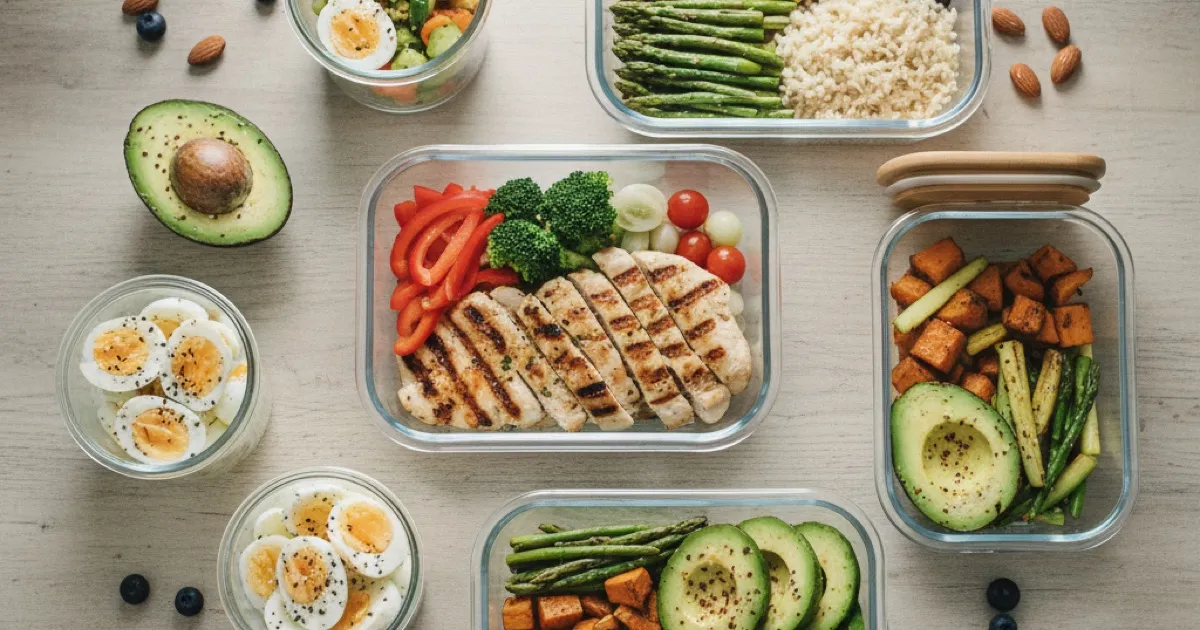
What you eat during your eating window matters as much as when you eat. A solid intermittent fasting meal plan focuses on nutrient-dense foods that keep you full, protect muscle mass, and give your body what it needs to perform during fasting hours.
An intermittent fasting meal plan should prioritize protein (0.7-1g per pound of body weight), healthy fats, complex carbohydrates, and plenty of vegetables. For a 16:8 schedule, this typically means two to three meals within your eating window, starting with protein and fats when you break your fast.
This guide covers sample meal plans for the most popular fasting protocols, what to eat at each meal, and how to structure your eating window for the best results.
Why Your Meal Plan Matters During Fasting
With a compressed eating window, you have fewer meals to hit your nutrition targets. Every meal needs to count. A poor meal plan during fasting leads to:
- Muscle loss from inadequate protein
- Energy crashes from too many refined carbs at the wrong time
- Increased hunger during fasting hours from low-satiety food choices
- Nutrient deficiencies from eating the same limited foods repeatedly
- Plateaus from eating too many or too few calories
The goal isn't perfection. It's building a repeatable eating pattern that makes fasting sustainable and effective.
Building Your Intermittent Fasting Meal Plan
Step 1: Set Your Protein Target
Protein is the foundation of any fasting meal plan. It preserves muscle, keeps you full for hours, and has the highest thermic effect of any macronutrient (your body burns 20-30% of protein calories just digesting it).
Your target: 0.7-1g of protein per pound of body weight per day.
| Body Weight | Daily Protein Target | Per Meal (2 meals) | Per Meal (3 meals) |
|---|---|---|---|
| 130 lbs | 91-130g | 45-65g | 30-43g |
| 160 lbs | 112-160g | 56-80g | 37-53g |
| 190 lbs | 133-190g | 66-95g | 44-63g |
| 220 lbs | 154-220g | 77-110g | 51-73g |
Step 2: Choose Your Eating Window
Your meal plan depends on your fasting protocol:
- 16:8: 8-hour window. Fits 2-3 meals comfortably. Most flexible for meal planning.
- 18:6: 6-hour window. Usually 2 meals. Each meal needs higher nutrient density.
- 20:4/OMAD: 4-hour window or 1 meal. Requires careful planning to hit all nutrition targets in limited meals.
Step 3: Structure Your Meals
Meal 1 (breaking the fast): Protein + healthy fats + vegetables. This stabilizes blood sugar after hours of fasting and sets the tone for your eating window. Avoid breaking your fast with sugar or refined carbs, which cause a blood sugar spike and crash. For specifics, see our guide on the best foods to break a fast.
Meal 2 (middle meal, if applicable): Balanced plate with protein, complex carbs, and vegetables. This is your fuel meal. If you're active or exercise during your fasting window, this meal should be larger.
Meal 3 (last meal before fasting): Protein + complex carbs + healthy fats. The carbohydrates help with serotonin production and sleep quality. The fats slow digestion, keeping you satisfied longer into your fasting window. Eat this meal 2-3 hours before bed.
Sample 16:8 Meal Plan (Noon-8 PM Window)
Day 1
12:00 PM — Break-fast meal
- 3 eggs scrambled with spinach and feta cheese
- Half an avocado
- 1 slice whole grain toast
- ~35g protein
3:30 PM — Snack
- Greek yogurt (plain, full-fat) with a handful of walnuts
- ~18g protein
7:30 PM — Dinner
- Grilled chicken thighs (6 oz)
- Roasted sweet potato
- Steamed broccoli with olive oil
- ~42g protein
Daily total: ~95g protein (adjust portions up for higher targets)
Day 2
12:00 PM — Break-fast meal
- Salmon fillet (5 oz) pan-seared
- Mixed green salad with olive oil and lemon
- Quinoa (half cup)
- ~38g protein
4:00 PM — Snack
- 2 hard-boiled eggs
- Apple with almond butter
- ~14g protein
7:30 PM — Dinner
- Ground turkey stir-fry with bell peppers, zucchini, and brown rice
- Side of edamame
- ~40g protein
Daily total: ~92g protein
Day 3
12:00 PM — Break-fast meal
- Cottage cheese (1 cup) with berries and a drizzle of honey
- 2 turkey sausage links
- ~38g protein
3:30 PM — Snack
- Handful of almonds and a cheese stick
- ~11g protein
7:30 PM — Dinner
- Beef and vegetable stew (lean beef chunks, potatoes, carrots, onions)
- Side salad
- ~35g protein
Daily total: ~84g protein
Sample 18:6 Meal Plan (1 PM-7 PM Window)
With only 6 hours and two meals, each meal needs to be more nutrient-dense.
Day 1
1:00 PM — Meal 1
- 4-egg omelet with mushrooms, peppers, and cheddar cheese
- Avocado slices
- Side of mixed fruit
- ~40g protein
6:30 PM — Meal 2
- Grilled steak (6 oz)
- Baked potato with Greek yogurt topping
- Roasted asparagus
- ~52g protein
Daily total: ~92g protein
Day 2
1:00 PM — Meal 1
- Chicken Caesar salad (6 oz grilled chicken, romaine, parmesan, olive oil dressing)
- Hard-boiled egg on the side
- ~48g protein
6:30 PM — Meal 2
- Baked salmon (6 oz) with lemon and dill
- Brown rice
- Steamed green beans with garlic
- ~42g protein
Daily total: ~90g protein
Sample 5:2 Fasting Day Meal Plan (500-600 Calories)
On 5:2 fasting days, you eat 500-600 calories total. Protein is even more critical here to prevent muscle loss on restricted days.
Breakfast (200 cal)
- 2 scrambled eggs
- Handful of cherry tomatoes
- ~14g protein
Dinner (350 cal)
- Grilled chicken breast (5 oz) with lemon herbs
- Large mixed green salad with cucumber, peppers, and light vinaigrette
- ~35g protein
Daily total: ~49g protein from only 550 calories
The key on 5:2 fasting days: maximize protein per calorie. Lean protein sources (chicken breast, egg whites, white fish, shrimp) give you the most protein with the least calories.
Foods That Make Fasting Easier
Some foods keep you fuller longer, making the next fasting window easier to handle.
High-satiety proteins:
- Eggs (6g protein each, plus healthy fats)
- Greek yogurt (15-20g per cup)
- Chicken breast (31g per 4 oz)
- Salmon (25g per 4 oz, plus omega-3s)
- Cottage cheese (28g per cup)
Healthy fats that slow digestion:
- Avocado
- Nuts and seeds (almonds, walnuts, chia seeds)
- Olive oil
- Nut butters
Complex carbs for sustained energy:
- Sweet potatoes
- Brown rice
- Quinoa
- Oats
- Legumes (lentils, chickpeas, black beans)
Fiber-rich vegetables:
- Broccoli, cauliflower, Brussels sprouts
- Leafy greens (spinach, kale, arugula)
- Bell peppers, zucchini, mushrooms
Foods to Avoid or Limit
These foods make fasting harder by spiking blood sugar and increasing hunger:
- Sugary breakfast foods (donuts, pastries, sweetened cereal) — terrible choices for breaking a fast
- White bread and refined grains — digest quickly, leave you hungry
- Sugary drinks (soda, fruit juice, sweetened coffee) — liquid calories with zero satiety
- Processed snacks (chips, crackers, cookies) — designed to make you eat more
- Alcohol — empty calories, disrupts sleep, increases next-day hunger
For a complete guide on what you can consume during your fasting window, see what breaks a fast and does coffee break a fast.
How to Adjust Your Meal Plan for Your Goals
For weight loss
Create a moderate calorie deficit (300-500 calories below maintenance). Don't go below 1,200 calories for women or 1,500 for men. Keep protein high to preserve muscle. Focus on foods that keep you full so the deficit doesn't feel like punishment.
For muscle building
Eat at maintenance calories or a slight surplus. Prioritize protein (1g per pound of body weight). Time your largest meal around your workout. Include carbohydrates in your pre-workout meal for exercise performance.
For general health
Eat at maintenance calories. Focus on food quality over quantity. Hit your protein target. Include a variety of vegetables, fruits, whole grains, and healthy fats. The benefits of intermittent fasting come from the fasting itself, not from extreme dieting during your window.
For women
Women may need to adjust their meal plan based on their menstrual cycle. During the luteal phase, increase complex carbohydrates slightly to manage progesterone-driven cravings. Don't fight the hunger — work with it by adding 100-200 calories of nutrient-dense carbs.
Meal Prep Tips for Fasters
Planning ahead prevents poor choices when your eating window opens and you're hungry.
Cook protein in bulk. Grill 2-3 pounds of chicken, bake a sheet pan of salmon, or boil a dozen eggs on Sunday. Store in the fridge for the week. When your window opens, your protein is ready.
Pre-chop vegetables. Wash and chop broccoli, peppers, onions, and leafy greens. Store in containers. When it's time to eat, you can build a salad or stir-fry in minutes.
Keep simple break-fast options ready. Hard-boiled eggs, Greek yogurt, cottage cheese, and nuts require zero cooking. When you're hungry at noon, you don't want to spend 30 minutes preparing food.
Batch cook grains. Cook a pot of brown rice, quinoa, or sweet potatoes. Refrigerate. Reheat portions throughout the week as a base for meals.
Track Your Fasting, Fuel Your Window
Your meal plan and fasting schedule work together. The quality of your eating window determines how you feel during your fasting window, and consistent fasting makes your meals more effective.
FastFocus keeps your fasting on track so you can focus on eating well during your window. Pick your certified protocol (16:8, 18:6, 20:4, 5:2, or OMAD), start the timer, and track every session. Your fasting history and streak tracker keep you consistent. The weight tracker shows how your nutrition and fasting patterns translate into results over time.
Frequently Asked Questions
What should I eat first when breaking my fast?
Start with protein and healthy fats: eggs, Greek yogurt, nuts, avocado, or lean meat. These stabilize blood sugar after hours of fasting. Avoid breaking your fast with sugar, refined carbs, or large amounts of fruit, which cause a blood sugar spike and crash that leaves you hungrier.
How many calories should I eat during intermittent fasting?
The same amount you'd eat without fasting, unless you're specifically targeting weight loss. For weight loss, aim for a 300-500 calorie deficit below your maintenance level. Don't go below 1,200 calories (women) or 1,500 calories (men). Fasting changes when you eat, not necessarily how much.
Can I eat whatever I want during my eating window?
Technically yes, but food quality affects your results. Eating 1,800 calories of protein, vegetables, and whole grains produces very different outcomes than 1,800 calories of pizza and ice cream. Both can lead to weight loss in a deficit, but nutrient-dense foods keep you fuller, preserve muscle, and support your health during fasting.
Do I need to eat breakfast foods when I break my fast?
No. Break your fast with whatever nutritious meal you prefer. Lunch-style meals (chicken salad, grain bowls, soups) work just as well as traditional breakfast foods. The most important factor is getting protein and healthy fats in your first meal, regardless of what that meal looks like.
How do I get enough nutrients with fewer meals?
Focus on nutrient density. Choose foods that pack the most vitamins, minerals, protein, and fiber per calorie. Eggs, salmon, leafy greens, sweet potatoes, Greek yogurt, nuts, and legumes are all nutrient powerhouses. Avoid empty-calorie foods that take up space in your eating window without contributing nutrition.
Eat Well, Fast Well
A good meal plan makes intermittent fasting easier and more effective. Focus on protein at every meal, break your fast with whole foods, and plan ahead so hunger doesn't drive bad choices. The rest takes care of itself.
Track your fasting schedule with FastFocus and pair consistent fasting with smart eating. Free on iOS and Android.