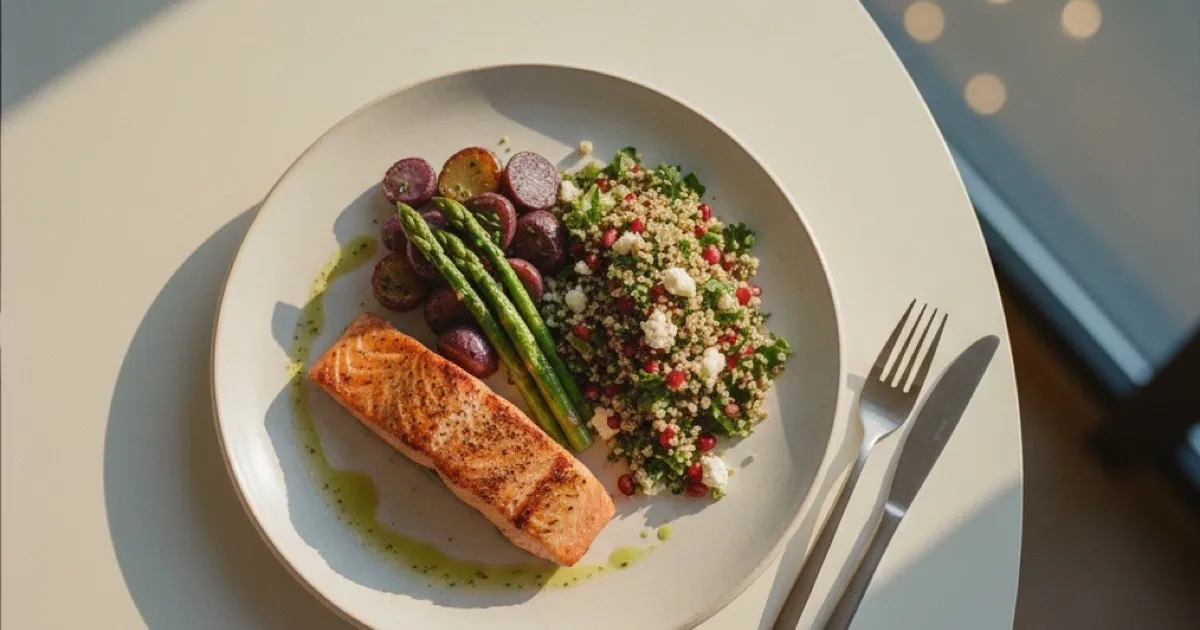
The OMAD diet — One Meal a Day — is exactly what it sounds like. You eat all your daily calories in a single meal, then fast for the remaining 23 hours. It's the most aggressive common intermittent fasting protocol, and it produces fast results. But it also carries risks that gentler methods like 16:8 don't.
OMAD is a fasting protocol where you eat one meal per day and fast for roughly 23 hours. It accelerates fat loss and deepens autophagy but makes it harder to get adequate nutrition. OMAD works best as a short-term tool or occasional practice, not a permanent eating pattern for most people.
Before you try it, you need to understand what OMAD actually does to your body, who it works for, and why many people are better off with a less extreme schedule. Here's the complete guide.
How the OMAD Diet Works
OMAD compresses your entire day's nutrition into one eating window, usually 30-60 minutes. The rest of the day, you consume nothing but water, black coffee, or plain tea.
Most people pick dinner as their single meal. You fast through the morning and afternoon, then eat a large, nutrient-dense dinner. Some choose lunch instead, which leaves the evening for digestion before sleep.
The fasting mechanics are the same as other intermittent fasting protocols, just more intense:
- Hours 0-12: Glycogen depletion, insulin drops to baseline
- Hours 12-18: Fat burning ramps up, ketone production begins
- Hours 18-23: Deep fat oxidation, autophagy activation, growth hormone peaks
- Hour 23-24: You eat your meal, insulin rises, mTOR activates for growth and repair
Because you're fasting 23 hours, you spend more daily time in fat-burning and autophagy states than any other common protocol. That's the appeal. The challenge is fitting 1,500-2,500 calories of nutritious food into one sitting.
OMAD Diet Benefits
Faster fat loss. With 23 hours of fasting per day, you spend the maximum possible time burning stored fat. Most people naturally eat fewer total calories in one meal than they would across two or three meals, even when trying to eat enough. A 2007 study found that people eating one meal per day consumed 10% fewer daily calories than those eating three meals, without being told to restrict intake.
Simplified eating. No meal prep for breakfast and lunch. No decisions about what to snack on. You plan one meal, eat it, and you're done. For people who find daily food decisions exhausting, this simplicity is a genuine benefit.
Deeper autophagy. A 23-hour fast puts you well into the accelerated autophagy zone. You're getting cellular cleanup benefits that shorter fasts (14-16 hours) don't reach as effectively. If autophagy is your primary goal, OMAD delivers more per day than 16:8 or 18:6.
Improved insulin sensitivity. Extended daily fasting keeps insulin at baseline for most of the day. A study published in Metabolism found that participants eating one meal per day had lower fasting insulin and improved insulin sensitivity compared to those eating three meals, even when total calories were matched.
Mental clarity. After the adaptation period, many OMAD practitioners report their sharpest mental focus during the fasted afternoon hours. Elevated ketones and norepinephrine contribute to this effect.
OMAD Diet Risks and Downsides
OMAD's intensity is both its advantage and its biggest problem. Here's what you need to take seriously.
Nutrient deficiency. Getting enough protein, vitamins, minerals, fiber, and healthy fats in a single meal is genuinely difficult. A 160-pound person needs 112-160 grams of protein per day. That's hard to consume — and absorb — in one sitting. Over weeks, nutritional gaps accumulate. Calcium, iron, vitamin D, and B vitamins are particularly hard to cover.
Muscle loss risk. Without sufficient protein distributed throughout the day, muscle protein synthesis stays suppressed for most of your waking hours. A 2020 study in the Journal of the International Society of Sports Nutrition found that protein timing matters for muscle preservation — one large bolus is less effective than spreading intake across 2-4 meals. If you're doing resistance training, OMAD makes muscle maintenance harder.
Binge eating risk. Eating one meal after 23 hours of fasting can trigger overeating. The line between "a large nutritious meal" and "a binge" gets blurry when you're extremely hungry. People with any history of disordered eating should avoid OMAD entirely.
Social isolation. Most social activities involve food. If your one meal is dinner, you can't eat breakfast or lunch with friends, family, or coworkers. Over months, this affects relationships and quality of life for some people.
Digestive stress. Eating 1,500-2,500 calories in one sitting puts significant strain on your digestive system. Bloating, gas, acid reflux, and stomach discomfort are common, especially in the first few weeks.
Cardiovascular concerns. A 2023 study published in the Journal of the Academy of Nutrition and Dietetics found an association between eating one meal per day and increased cardiovascular mortality risk. The study had limitations (observational, not causal), but it raised enough concern that most nutrition researchers recommend against permanent OMAD practice.
Who Should Try OMAD
OMAD works best for specific people in specific situations.
Experienced fasters. If you've been doing 16:8 fasting comfortably for several months and want to push further, OMAD is a natural progression. Don't jump to OMAD from no fasting experience.
Short-term use. Using OMAD for 2-4 weeks to break through a weight loss plateau or to deepen autophagy benefits is reasonable. Using it permanently raises nutritional concerns.
People who naturally eat large meals. Some people prefer fewer, bigger meals. If you've always disliked snacking and prefer one substantial dinner, OMAD aligns with your existing preference.
Periodic practice. Doing OMAD 1-3 days per week while eating normally on other days gives you the metabolic benefits without the nutritional risks of daily practice. This hybrid approach is increasingly recommended by fasting researchers.
Who Should NOT Try OMAD
Beginners. Start with 16:8 or 14:10 and build your fasting fitness. Jumping to OMAD without adaptation leads to extreme hunger, poor food choices, and quitting.
People who exercise intensely. Hard training requires fuel and recovery nutrition. One meal per day doesn't provide the protein timing or glycogen replenishment that serious athletes need. If you lift weights or do intense cardio, combine fasting with exercise using a wider eating window.
Anyone with eating disorder history. The restriction-binge cycle of OMAD can trigger disordered patterns. If you have a complicated relationship with food, use gentler approaches or work with a professional.
Pregnant or breastfeeding women, children, people with diabetes (without medical supervision), anyone underweight.
What to Eat on OMAD
Your one meal needs to do the work of an entire day's nutrition. This isn't the time for pizza and beer.
Protein first (40-50g minimum). A large portion of chicken, fish, beef, eggs, or tofu. Aim for 40-50 grams of protein at minimum — ideally more if you're active. Your body can absorb and use more protein per meal than the outdated "30g per meal" myth suggests, but you still need to prioritize it.
Vegetables for volume and micronutrients. Fill half your plate with cooked and raw vegetables. Spinach, broccoli, sweet potatoes, peppers, leafy greens. These provide fiber, vitamins, and minerals you'd otherwise miss.
Healthy fats for satiety. Avocado, olive oil, nuts, seeds, fatty fish. Fats slow digestion and help your body absorb fat-soluble vitamins (A, D, E, K).
Complex carbs for energy. Rice, potatoes, quinoa, oats. These replenish glycogen stores depleted during your 23-hour fast.
A sample OMAD plate (roughly 1,800 calories):
- 8 oz grilled salmon (400 cal, 46g protein)
- Large mixed salad with olive oil dressing (200 cal)
- 1 cup brown rice (215 cal)
- 1 cup roasted broccoli and sweet potato (180 cal)
- 1 avocado (320 cal)
- 2 eggs scrambled with cheese (280 cal, 18g protein)
- Handful of almonds (170 cal)
Total: ~1,765 calories, 75g+ protein, dense micronutrient profile.
For more ideas on what to eat after fasting, see our guide on the best foods to break a fast.
OMAD vs. Other Fasting Protocols
How does OMAD compare to other methods?
OMAD vs. 16:8. 16:8 is more sustainable long-term, easier to get adequate nutrition, and produces similar weight loss results over 6+ months (though OMAD produces faster initial loss). 16:8 is the better starting point for most people.
OMAD vs. 5:2. 5:2 restricts calories on only two days per week. It's more flexible socially and nutritionally. OMAD produces faster daily fat burning but 5:2 is easier to maintain for years.
OMAD vs. water fasting. Water fasting (24-72 hours with zero calories) produces deeper metabolic effects per session. OMAD is daily but includes one full meal. Water fasting is a periodic tool; OMAD is a daily protocol.
The best fasting schedule is the one you can follow consistently. OMAD produces the fastest per-day results but has the highest dropout rate. A sustainable 16:8 practice beats an abandoned OMAD attempt every time.
How to Start OMAD Safely
If you've decided OMAD fits your goals, ease into it.
Week 1-2: Extend your existing fast. If you're doing 16:8, move to 18:6 for a week, then 20:4.
Week 3: Try OMAD for 2-3 days. Pick non-training days. Eat a large, nutrient-dense dinner. See how your body responds.
Week 4: Increase frequency if it feels sustainable. Try 4-5 OMAD days with 1-2 regular eating days.
Ongoing: Monitor yourself. Track energy, mood, workout performance, and weight. If you feel consistently drained, lose strength, or develop digestive issues, pull back to a wider eating window.
How to Track Your OMAD Fasting
Tracking OMAD keeps you accountable and shows patterns over time. Your fasting duration, meal quality, and weight trends all matter.
FastFocus includes OMAD as a certified protocol. Select it from the protocol list, start your timer after your meal, and the app tracks your 23-hour fast automatically. Your fasting history and streak data show consistency trends, and the built-in weight tracker connects your fasting patterns to results over time.
Frequently Asked Questions
Is OMAD safe long-term?
The research is mixed. Short-term studies (8-12 weeks) show benefits for weight loss and insulin sensitivity. But one observational study linked long-term one-meal-a-day eating with increased cardiovascular risk. Most nutrition researchers recommend OMAD as a periodic tool (a few days per week or a few weeks at a time) rather than a permanent lifestyle for most people.
Will I lose muscle on OMAD?
Muscle loss risk is higher with OMAD than with 16:8 or 18:6 because protein timing matters for muscle synthesis. To minimize muscle loss: eat at least 40-50g protein in your meal, do resistance training, and consider OMAD only 3-5 days per week with normal eating on training days.
How many calories should I eat on OMAD?
Eat your normal daily calorie needs in one meal. For most adults, that's 1,500-2,500 calories depending on size, activity level, and goals. Don't use OMAD as an excuse to severely restrict calories — chronic undereating causes metabolic slowdown and muscle loss.
Can I drink coffee during OMAD fasting?
Yes. Black coffee, plain tea, and water are fine during your 23-hour fasting window. These have negligible calories and don't break your fast. Avoid adding cream, sugar, or milk. For details on what you can drink, see our guide on what breaks a fast.
Is OMAD better than 16:8 for weight loss?
OMAD produces faster initial weight loss but has a higher dropout rate. Over 6-12 months, studies show similar total weight loss between OMAD and 16:8 for people who stick with their chosen method. Pick the approach you'll follow consistently.
The Bottom Line on OMAD
OMAD is a powerful but aggressive fasting protocol. It works well for experienced fasters using it periodically or short-term. It's not ideal as a permanent daily practice for most people due to nutritional challenges and sustainability concerns.
Track your OMAD fasts with FastFocus — select the certified OMAD protocol, start your timer, and see your fasting data build over time. Free on iOS and Android.